

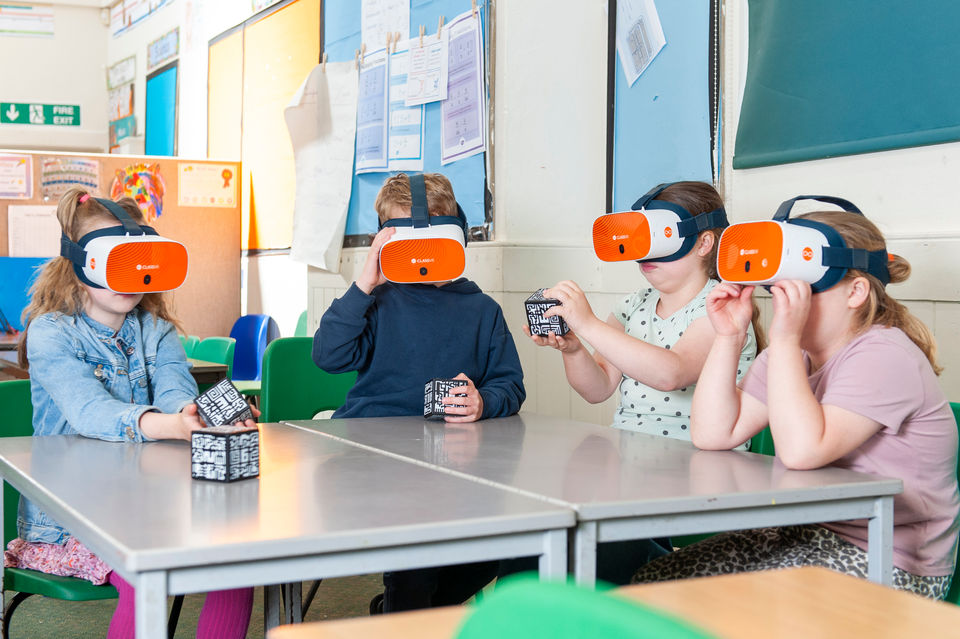
In September New York City recommended limiting screen time to thirty minutes a day for grades 3–5. Iowa has gone further and put it in law: digital instruction in K-5 classrooms capped at sixty minutes a day, signed in May. This arrived after a year in which districts across the US quietly took laptops back off their youngest children. The line that ought to worry EdTech most is the calmest thing anyone said.
New York’s Schools Chancellor, Kamar Samuels: “Innovation does not mean more technology.”
What the anger is actually about
The public argument is about quantity: thirty minutes or sixty, two hours or none. But the evidence points at screens that never stop, rather than at screens in general.
The National Parents Union asked more than 1,500 parents this summer (2026). One per cent wanted zero screen time in schools. Three-quarters wanted schools to set daily limits, and three-quarters said current computer and tablet use was about right. That is a constituency asking for boundaries, not one that objects to technology.
When you consider what districts actually changed you see the same thing. Almost everywhere, the retreat began with take-home devices. However, when district technology leaders were surveyed this year, they reported high community concern about personal device use at school at more than twice the rate they reported it about technology used for learning. Several of the new state phone laws explicitly carve out devices schools provide for instruction, with legislators drawing the line in statute as the public discourse continues to rumble.
As a teacher who advocated for the judicious, targeted and responsible use of technology in the classroom for over 20 years, I know that the problem was never the pixel but the absence – or the perceived absence – of a stopping point. A tablet, a laptop, a phone: they don’t publish guidance for teachers to tell a student: “you’re done now.”
Disciplined technology
We are an EdTech company in which the “Ed” is loud and proud. Nearly every company selling technology to schools has spent the past year explaining that its own technology is the “good” kind. I’m aware of how that looks. A test a vendor passes by self-certification isn’t a test. So how do we look at what we do objectively? Here’s a starting point.
How many technology companies tell schools to use their product for ten to fifteen minutes maximum?
Not many. I’ve tried to find them. The industries that ask you to moderate your consumption almost always had to be pushed into it by a regulator, a lawsuit, or a public health campaign. Very few do it unprompted. I have yet to find one that builds the limit into the middle of what it sells.
So, ten to fifteen minutes per lesson. Not “in moderation”: actual numbers. We’re telling you to put ours down after a quarter of a lesson because of the depth, engagement and educational potential of what we provide.
Minimum time, maximum impact
Ten to fifteen minutes is when a headset works at its best. Short, sharp and deep, and then leveraged by teachers while the experience still has continuing impact. We provide inherently disciplined technology.
So what constitutes this “maximum impact”? Firstly, VR is a bit of a magic trick and a true gift to teaching and learning because it removes the rest of the room and anything other than the learning context. True presence. No notifications, nothing else to look at, nobody to nudge. Ask any teacher whether they’d take fifteen minutes of complete, undivided attention from every student in the room and they’d bite your hand off (and potentially need a lie down from the shock).
Then there’s the specifics. A science class can run the same experiment three times, change one variable each time, and compare the results, with no cost or hazard. The same fifteen minutes can put a child inside a cell or close enough to a heart to watch a valve close. Scale, repetition and safety are some of the things a school lab cannot supply.
Maths takes two forms. One is fluency: mental strategies rehearsed in the headset, at pace, without a worksheet. The other is visualisation. A child can walk a number line, explore a shape from the inside, and see a thousand as a quantity rather than a symbol. Estimation rests on a feel for magnitude, which is hard to build on a whiteboard.
History and geography are where VR has always made the most obvious sense. A school trip costs money, takes time and planning, and only reaches what sits within a bus ride. Fifteen minutes in a headset reaches the Pyramids of Giza on a Tuesday morning, for a class that also has a novel and a set of equations to cover that week. Distance is only one of the barriers. Some places cannot be visited at any price, whether because of danger, depth or several million years: space, the ocean floor, the inside of a volcano, the age of the dinosaurs. VR in this context is game changing.
Literacy is the case I find most persuasive. A VR scene can be read the way a film or a photograph is read, and teachers have taught inference, prediction and authorial intent through imagery for decades. A headset does the same work on a larger and more absorbing scale, for every student in the room whatever their reading level.
For a child who finds the world overwhelming, fifteen minutes is a rehearsal or a reset. A student can build a sensory space to their own specification, with the light, sound and pace they choose, and return repeatedly when regulation is standing between them and their learning. The same headset lets them practise a life skill before it matters: a new classroom, a dentist’s chair or a supermarket, visited a dozen times in advance. That is what inclusion looks like in a lesson, and no other classroom technology I have used does the same job.
Used badly, a headset could be considered “just another distraction.” VR does not make lessons better by simply being there. Its value comes from the specific things it can do exceptionally well, such as creating a sense of presence that can make learning more immediate and memorable. Presence is a significant part of its power: scale, place, and the removal of a barrier between a child and the full reach of their knowledge or imagination. Use it exactly there. Use paper, books and the whiteboard everywhere else.
The teaching that follows
Then, the headset comes off and a different learning opportunity arrives. The test of a good immersive lesson isn’t how impressed the children were. It’s what a student brings to the follow-up discussion: the questions they ask, the curiosity and empathy they show, and the work they produce afterwards.
Every new experience we release ships with a lesson structure in three parts: before the experience, during the experience, after the experience. The before and after are where the learning happens. The “before” aims a child’s attention so that ten minutes produces thinking, deeper understanding and curiosity to learn. The “during” and “after” contain the retrieval, the discussion and the writing: the part that decides whether any of the learning survives the week. It arrives with adaptive teaching and differentiation written in, because thirty children will experience the same fifteen minutes differently, and pretending otherwise is how technology only ends up serving a small percentage of a class.
An objection
There’s a serious objection worth meeting. Some will argue that even excellent educational screen time displaces something: talk, movement, human relationships. That objection is fatal to the “our content is the good content” position and most defences of classroom technology have no answer.
Mine is that a headset in a classroom produces all three of the examples above. Our language learning content, LingoLab, exists because immersion frees student talk. I’ve seen it myself in the classroom – a student using a VR headset for visual support speaks with peers on topic and more freely, and oracy is where language learning begins. Some of our headsets are 6DoF, so a student stands and moves through a space rather than sitting still in front of one. I’ve watched increased socialisation – a class that has just been on a “trip” together genuinely has something relevant and exciting to discuss with each other.
In conclusion
None of this is a position we adopted last year. Ten to fifteen minutes has been ClassVR’s guidance from its outset. Which is why I’m not asking for VR to be exempted from the screen-time conversation. Hold us to the same standard as everything else in the building. With a phone or a tablet, drift is the default and stopping requires someone to decide or enforce. Our cards are already on the table. A written, published limit and access only within a classroom setting mean the parameters for our users are firmly established.
A generation shown technology that arrives with a purpose, does its work and is then put down is being shown something close to the opposite of the doom-scroll. That contrast may matter, and bounded use at school may shape habits children take beyond the classroom.
What I’d argue for meanwhile is discipline itself. Not fewer screens or more. Technology in a classroom should have a purpose you can name, a stated limit on how long it runs for, and a teacher waiting on the other side of the experience.
“Innovation does not mean more technology.” Indeed. Innovation means the best possible technology for learners, with clearer boundaries.
Sources
Office of the Mayor, City of New York, press release, September 2, 2026.
https://www.nyc.gov/mayors-office/news/2026/09/mayor-mamdani-and-chancellor-samuels-put-students-first-with-nat
Iowa Department of Education, HF 2676 Student Instructional Technology FAQ. Signed May 20, 2026.
https://educate.iowa.gov/media/13274/download
EdSource, “Fresno Unified Elementary Students Must Return Laptops as District Shifts Focus to In-Class Use,” February 2026.
https://edsource.org/2026/fresno-unified-elementary-students-must-return-laptops-as-district-shifts-focus-to-in-class-use/751213
National Parents Union, survey of 1,527 parents of public school students, fielded May 28–June 1, 2026. Reported in Education Week, “Parents Don’t Hate Ed Tech. They Just Want More Balanced Use,” June 26, 2026.
https://www.edweek.org/technology/parents-dont-hate-ed-tech-they-just-want-more-balanced-use/2026/06
Consortium for School Networking (CoSN), U.S. State of EdTech 2026, fielded January 14–March 1, 2026.
https://www.cosn.org/wp-content/uploads/2026/05/U.S.-State-of-EdTech-2026.pdf
Indiana General Assembly, Senate Enrolled Act 78 (2026).
https://iga.in.gov/pdf-documents/124/2026/senate/bills/SB0078/SB0078.08.ENRH.pdf
Illinois General Assembly, Senate Bill 2427, 104th General Assembly (2026).
https://ilga.gov/legislation/BillStatus?DocNum=2427