
Every year, students look forward to their class trips, student exchanges and activity weeks, all of which provide opportunities for students to interact with others, gain a deeper understanding of different cultures, reflect on their worldviews and create lifelong memories.
However, for most schools across the world, there are barriers in providing these traditional experiences for students. As a result, schools are turning to innovative solutions to create virtual field trips.
What Are Virtual Field Trips?
Virtual field trips are educational experiences that allow students to explore locations and engage with content without leaving the classroom. They take traditional field trips, which have long been a core part of education and have evolved from in-person visits to now fully immersive VR experiences. From historical sites to natural environments, virtual field trips give students access to experiences that might otherwise be difficult to experience in person.
Virtual field trips can be delivered in several ways, including educational videos, interactive boards and VR headsets, giving teachers the flexibility to choose the format that best fits their lesson objectives and classroom environment.
How VR Enhances Virtual Field Trips
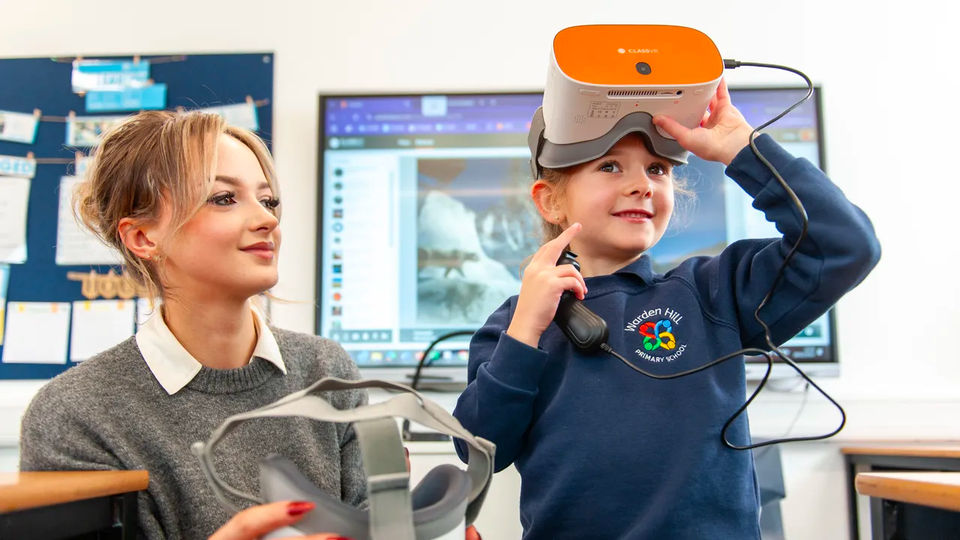
Virtual reality takes field trips beyond the classroom and into the heart of the action, bringing authentic locations and experiences into lessons and allowing students to explore environments as if they were really there. With our latest Xplorer headset, students benefit from high-quality visuals and immersive audio, helping them feel fully present.
Whether they’re observing Australian fur seals in their natural habitat, stepping inside an ancient Egyptian temple or exploring world-renowned natural wonders like Niagara Falls, these virtual field trips make learning more engaging and memorable.
Teachers can use VR in a variety of ways, including explorable scenes for interactive exploration and 360° images and videos for panoramic 360° virtual field trips. Through active learning, students can investigate new environments at their own pace, encouraging curiosity and engagement. By combining interactive exploration with full immersion, ClassVR helps students understand concepts more deeply and enjoy memorable learning experiences, all without leaving the classroom.
Benefits of Virtual Field Trips in Schools
Virtual field trips offer a wide range of advantages, benefiting students, supporting teachers and helping achieve key learning objectives.
Accessibility and Inclusion
Virtual field trips improve accessibility and inclusion by removing barriers such as travel costs, time spent gathering permission slips as well as the physical challenges of visiting locations outside of the school environment. They also make learning accessible for students with mobility challenges or SEND needs, allowing everyone to participate in immersive experiences.
Safe and Controlled Exploration
VR allows students to explore environments that may otherwise be too dangerous, remote or logistically challenging to access in the real world, all while following school health and safety guidelines. Immersive virtual field trips mitigate these risks as well as the challenge of keeping track of a whole class or school in external environments. For example, students can take a virtual field trip to a zoo and observe animals such as giraffes at Riga Zoo up close, all in a safe and controlled environment. Teachers maintain full control of viewpoints and activities through the ClassVR portal, ensuring every student stays engaged and supported through the experience.
Increased Engagement and Retention
Virtual field trips boost engagement and knowledge retention by turning passive observation into active learning. Immersive VR experiences help students form emotional connections to content, making it easier to remember information. Through explorable scenes, 360° images and videos, and interactive activities, learners can investigate new environments, historical sites, or wildlife habitats, creating memorable learning experiences that stick with them long after the lesson ends. By actively engaging with the material, students are more motivated and retain knowledge more effectively than through traditional classroom instruction alone.
Take Students Anywhere – Bring Them Back Instantly
Students can explore virtually anywhere in the world through immersive VR experiences, with each session typically lasting around 15 minutes. Unlike a traditional field trip, there’s no travel, accommodation or long journey back to manage, yet students stay just as engaged and retain just as much information.
From standing at the highest point on Earth at the Summit of Mount Everest to diving into the vibrant and colourful world of coral reefs, students can experience environments that would otherwise be impossible to visit. And when the lesson’s done, teachers can simply press pause on the portal, remove the headsets, and students are instantly back in the classroom, ready to continue learning.
Integrating VR into the Learning Curriculum
Virtual field trips can be seamlessly woven into lessons across subjects, offering new ways to engage students and support learning objectives. Science classes can take students to outer space, visiting the NASA Space Center and watching a 360° video of a rocket launch, or dive deep into oceans to explore marine life. Within English lessons, students can be transported into the worlds of classic literature, from Romeo and Juliet to other iconic stories. In Geography lessons students can virtually visit sites like Ancient Rome, as well as mountains, oceans, and cities, highlighted in the “Geography: Comparing Australia” case study.
ClassVR also provides ready-made resources to support teaching objectives, such as the Future Forest Toolkit for introducing climate change and environmental issues, the Halloween Lesson Pack for themed seasonal experiences, and VR and AR Lesson Plans to inspire immersive lessons across subjects.
These resources make it easy to embed VR into everyday teaching, supporting curriculum objectives while helping students have fun, memorable experiences that deepen understanding and improve retention.
Planning Your VR Experiences
With ClassVR, it’s simple to begin your trip around the world.
Directly from within the ClassVR portal, you can browse 360° images, videos and explorable scenes, then add to your playlists using the drag and drop functionality. AOnce you’re ready, simply push to your ClassVR headsets and start exploring!
VR field trips are so much easier to run and allow you to focus more on what matters: high-quality teaching, excellent student progress, and providing opportunities to inspire, motivate and challenge your students.
And, of course we can’t forget, having lots of fun whilst doing so!
Top tip: don’t forget, you can preview any video before downloading Just leave your headsets locked and launch the clips directly.
As with all new content releases, these categories will be growing and evolving over time – so don’t forget to check back often to see what new content we’ve added!
Make VR Field Trips Possible with ClassVR
Virtual field trips give students the chance to explore new places, experience authentic environments and learn in a safe, engaging and memorable way. By incorporating immersive technology into lessons, teachers can enhance learning across subjects while making experiences accessible for every student.
ClassVR provides 1000s of virtual reality experiences for students to explore, all without leaving the classroom! So, without the worry of risk assessments, extensive planning and parent permission, you can take your students to anywhere in the world, all from a click of a button.
Maybe you start your journey by taking your class to Australia to visit the Sydney Harbour. Next stop, a short trip across the Pacific Ocean to explore the Grand Canyon in the USA. Or why not trek through the Tanzanian Rainforest or take a stroll by the marina in Dubai? The world is your oyster!