
Saigon South International School in Vietnam has embraced immersive technology as a powerful tool to foster curiosity, creativity and deeper learning. With a set of eight ClassVR headsets, the school has successfully integrated virtual reality into elementary classrooms, enhancing learning experiences across subjects such as Science, English and beyond.
We spoke with Danai Maramba, Instructional Coach for Technology, about how the school has implemented ClassVR to empower teachers, inspire student creativity and embed immersive learning into everyday classroom practice.
Building Teacher Confidence and Independent Use
From the outset, Danai focused on equipping teachers with the confidence and skills needed to integrate virtual reality meaningfully into their lessons. Working closely with teachers, he models effective teaching strategies, co-teaches when needed and provides ongoing guidance to ensure that technology enhances clear learning objectives.
Teachers begin by exploring the ClassVR headsets themselves, building familiarity and confidence before introducing them to students. This hands-on approach ensures that by the time VR is used in the classroom, teachers are comfortable navigating the
ClassVR portal, delivering content and aligning immersive experiences with curriculum goals.
As a result, virtual reality has become a regular and successful part of classroom learning.
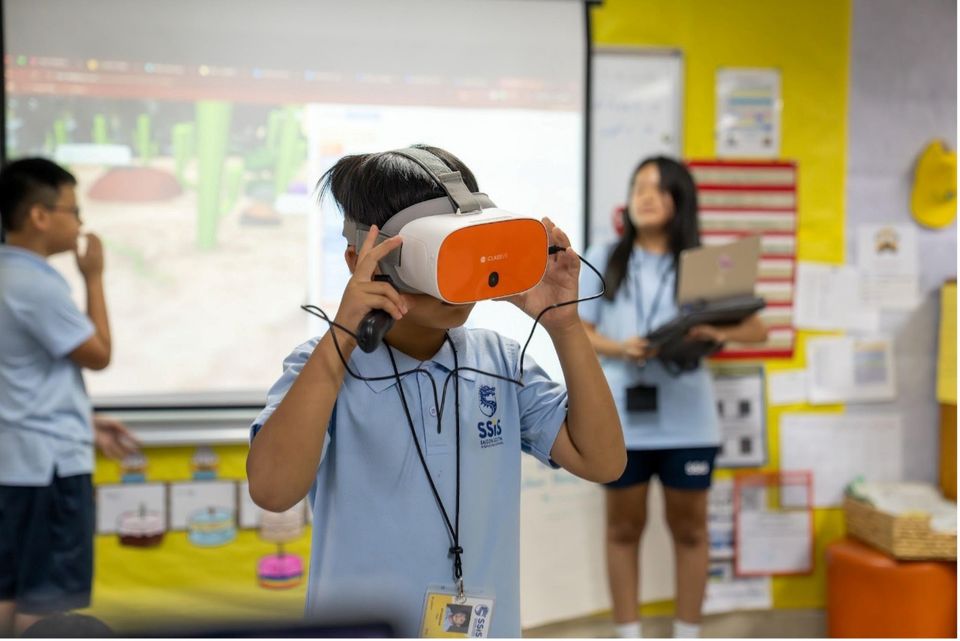
Empowering Students as Creators
A central pillar of the school’s approach is ensuring students use technology not just to consume content but to create and communicate their understanding.
In a Grade 5 unit on biomes and ecosystems, students have moved beyond traditional cardboard models to designing immersive digital environments using Delightex. Through ClassVR headsets, they can explore their own creations in a fully interactive way. These projects allow them to illustrate food chains and ecological relationships, demonstrate environmental balance and explore the impact of species loss.
To deepen their learning, students record voiceovers, guide others through their ecosystems and explain scientific concepts in their own words. Coding is also incorporated into the project, enabling them to program interactions that help illustrate cause and effect.
As Danai explains, “What’s really important is that our students are creators more than consumers. They’re not just looking at something; they’re demonstrating their thinking in meaningful ways.”
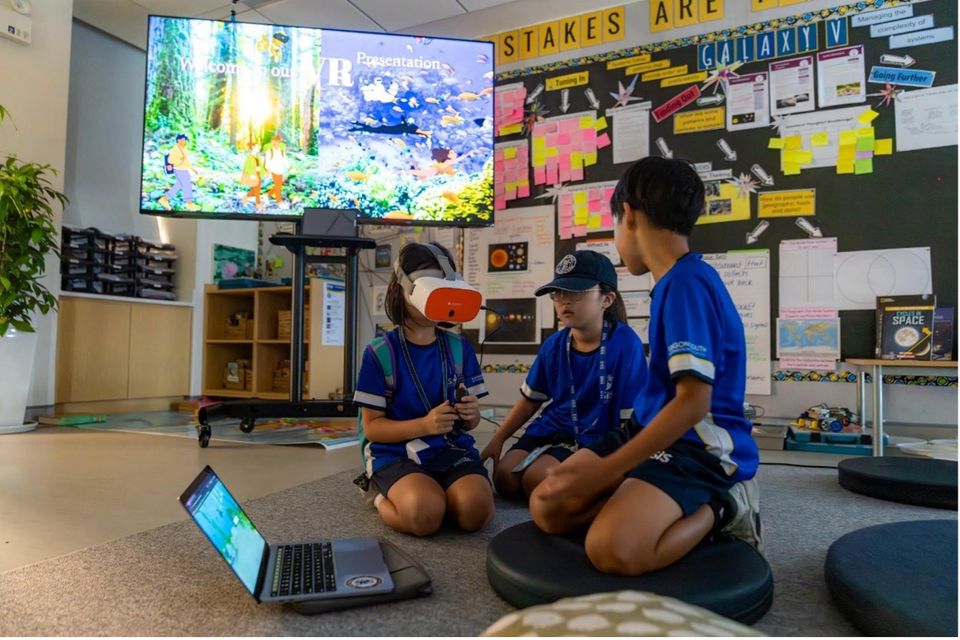
Transdisciplinary Learning Across Subjects
At Saigon South International School, VR is not confined to a single subject, it serves as a bridge across disciplines, helping students make meaningful connections across in their learning. Beyond Science, students integrate skills from Music, English and Coding to enrich their projects.
For example, when building virtual ecosystems, students create soundscapes in Music lessons and upload them to their VR worlds, resulting in rich multi-sensory experiences.
Younger students also benefit from VR in literacy-focused lessons, such as exploring fairy tales in immersive settings, which enhances comprehension and supports reading and writing tasks.
All activities are aligned to Common Core standards, ensuring that immersive learning remains purposeful and curriculum-driven. By integrating into subject areas, VR becomes a tool for authentic transdisciplinary learning rather than an isolated activity.
.jpg?tr=w-960)
Engaging Parents and Showcasing Learning
At the end of each unit, the school hosts a “Celebration of Learning,” inviting parents to experience their children’s work firsthand. These events provide students with the opportunity to showcase their VR projects, explain their thinking and learning process, and demonstrate connections across subjects.
Parents are often impressed by the depth and creativity of students’ work. As Danai shares, “Parents are just so amazed to see how their children are actually using the technology productively and positively, combining books, hands-on activities and virtual reality.”
By inviting families into the classrooms, the school strengthens its commitment to collaboration, transparency, and the meaningful integration of technology.
A Model for Meaningful Technology Integration
Saigon South International School’s approach demonstrates that successful technology integration goes beyond simply introducing new tools. By prioritizing teacher confidence, student creativity and cross-curricular connections, the school has created a sustainable model where immersive technology enhances, not replaces, high-quality teaching and learning.
Through this thoughtful implementation, virtual reality has become a powerful medium for students to explore, create, and communicate their understanding in ways that are both engaging and meaningful.