
Further Education
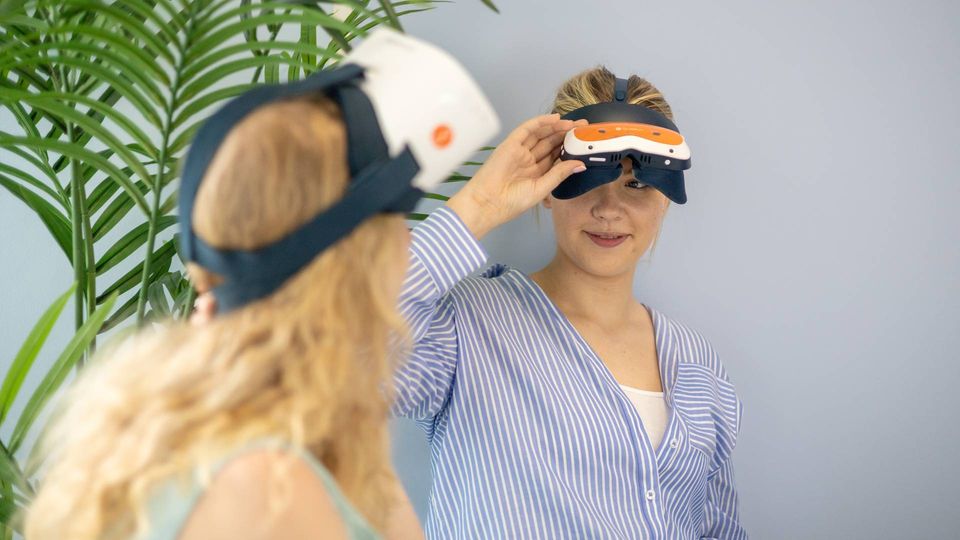
Further education is where students begin shaping their futures, often by choosing vocational routes that prepare them directly for employment. ClassVR brings these pathways to life through immersive, hands-on experiences that mirror real-world industries. From construction and healthcare to hospitality, manufacturing, and skilled trades, students can safely practice technical tasks, explore career options, and build confidence in their abilities.
At the same time, interactive modules develop essential workplace skills like communication, problem-solving, and teamwork, ensuring learners are not only career-aware, but career-ready. ClassVR Xcelerate, along with EduverseCTE, brings the power of virtual reality directly into career and technical education. By combining practical training with soft skill development, ClassVR helps colleges equip students with the tools they need to thrive in today’s job market.
ClassVR bridges the gap between study and employment, ensuring students leave further education not just with knowledge, but with the practical skills and workplace awareness employers demand.
Higher Education
Virtual and augmented reality are reshaping the landscape of higher education, empowering universities and colleges to deliver experiences that were once impossible. From stepping inside molecular structures to simulating medical procedures or exploring engineering prototypes, VR opens new doors for research, study, and professional preparation.
Mastery doesn’t come from reading about a process, it comes from doing it. In higher education, students need opportunities to apply theory in safe, practical, and repeatable ways. Virtual reality in higher education provides immersive learning environments where students can explore complex concepts, conduct virtual experiments, and engage in realistic training simulations that would be costly or unsafe in real life.
Virtual Reality vs Augmented Reality
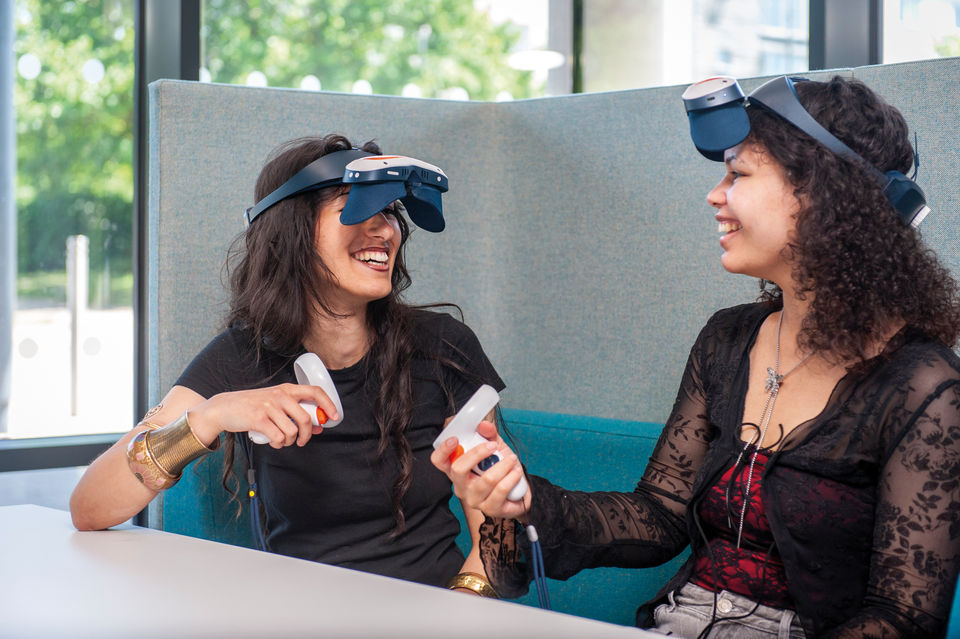
Virtual Reality and Augmented Reality are closely related but have different purposes. Virtual Reality places you inside a fully immersive digital environment. With VR, your senses make you feel as if you’ve been transported somewhere else entirely. Augmented Reality, on the other hand, blends the physical and digital worlds by overlaying computer-generated content onto what you see around you. At ClassVR, our headsets combine both technologies.
Frequently Asked Questions
What is VR used for in further education?
In further education, VR is mainly used for hands-on vocational and technical training – letting students safely practise trade, healthcare, construction and hospitality tasks, alongside soft-skill scenarios like workplace communication and teamwork, before they step into a real workplace.
How does augmented reality help higher education students?
Augmented reality overlays 3D models, visual guides, and interactive content onto physical objects and coursework, helping university and college students in fields like medicine, architecture and engineering make abstract theory tangible and easier to understand.
Which academic fields benefit most from VR and AR in higher education?
Fields that rely on spatial understanding or hands-on practice see the strongest benefits, including medicine, engineering, architecture, and the sciences – anywhere students need to explore a structure, simulate a procedure, or rehearse a skill safely and repeatably.
Do further and higher education students use the same ClassVR headset?
ClassVR Xcelerate, designed for secondary, further and higher education, combines full spatial (6DoF) tracking with a classroom-ready design, and is paired with EduverseCTE for career and technical education simulations.
Explore Further
More from ClassVR
- VR & AR for Australian Primary Schools – see the other end of the age-group range ClassVR supports.
- Technology in Schools: A Complete Guide – the bigger picture on EdTech adoption in Australian schools.
- ClassVR Australia – back to the AU homepage for the full ClassVR solution overview.
External Resources & Research
- Vocational Education and Training (VET) – the Australian Government’s official overview of VET, which already highlights VR and AR adoption.
- The VET Sector: A Quick Guide – Parliament of Australia’s overview of how VET is structured and funded.
- What is VET? – the NSW Department of Education’s explainer for students.
- The Cognitive Affective Model of Immersive Learning (CAMIL) – peer-reviewed research on how immersive VR supports learning outcomes.
- PwC VR Study – independent research on VR’s impact on training confidence and focus.