

Ready to get started integrating technology in teaching? There are some best practices that hold true for nearly all technologies, whether high-tech or not. Seeing clear expectations for technology integration in teaching and learning not only helps avoid unwanted behaviour, but also gives students a sense of security in the classroom because they know what to expect.

Keeping Technology Integration Aligned to the Curriculum
In general, curricula and education should be coherent. This means that classroom activities, homework, the curriculum, textbooks, assessments and students’ learning levels all have to fit together and work together – a process called instructional alignment. Technology integration in teaching and learning needs to be aligned to all of these components as well.
Let’s consider an example in practice. Say you’re a science teacher using augmented reality to allow your students to hold a water molecule in their hands and examine it. The curriculum should already include atoms and molecules as part of a larger curriculum that builds ideas and skills thoughtfully over many years, and assessments should cover the same content and skills that were taught – not, for example, an older exam given after newer content has been covered.
The Rewards of Technology Integration Done Well
Most importantly, students enjoy truly learning. A lesson that allows them to succeed and feel pride in their skills and improvement can help to boost their confidence and change their relationship with school. If a student struggles to understand the text of Macbeth but is able to watch a filmed version and take part in a discussion about what happened, this may help improve their self-esteem, giving them a ‘win’ that helps them feel engaged in the future.
Polling and discussion tools within platforms like Zoom or Teams can also help quiet students make their voices heard – not to mention serving as a quick formative assessment for the teacher. Adaptive learning tools can help personalise learning and allow differentiation in the classroom, ensuring students who are ahead of the pack aren’t bored with repetition, while students who need more support can receive that too.
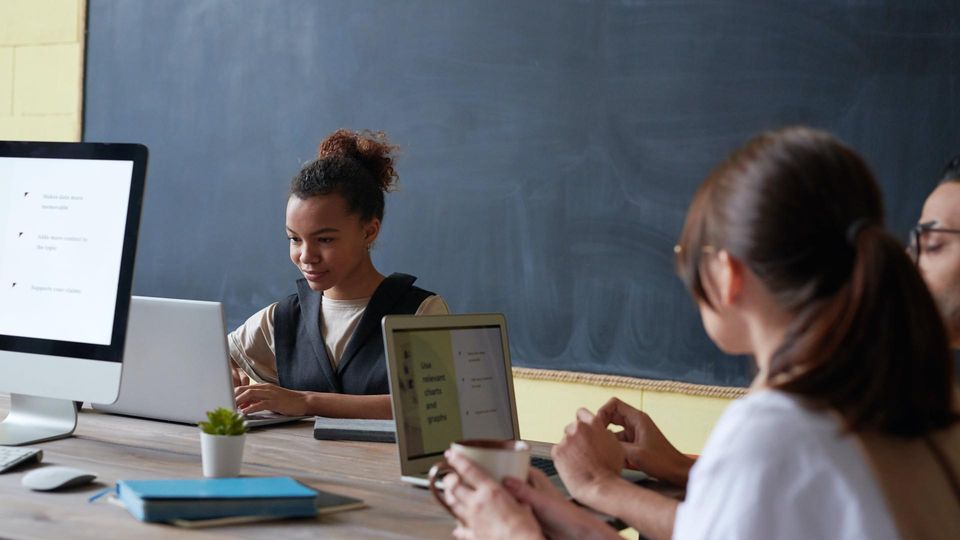
What are the rewards of integrating technology in the classroom skilfully, in a way that’s aligned with other components of instruction and the curriculum? Since there are so many kinds of classroom technologies, the benefits are equally wide-ranging….
Making Technology Integration Work in Practice
Successful integration of technology in education also means ensuring the technology you’re using fits with more concrete aspects of your classroom context, such as the physical capabilities of the classroom, training of teachers, and school IT support. A typical challenge might occur in a school that buys laptops for each student but has a shaky Wi-Fi connection, preventing smooth use in lessons.
Curious to learn more about how to integrate technology in the classroom via augmented reality and virtual reality? Take a look at ClassVR’s virtual reality resources for a host of examples, or learn more about our curriculum-aligned virtual and augmented reality content.
Frequently Asked Questions
What is technology integration in the classroom?
Technology integration in the classroom means using digital tools – from laptops and interactive whiteboards to VR and AR headsets – in a way that’s fully aligned with the curriculum, assessments and students’ learning levels, rather than added on as an afterthought.
Explore Further
More from ClassVR
- What is a Digital Classroom? – a deeper look at one model of technology integration.
- What is a Smart Classroom? – how a physical classroom evolves with integrated EdTech.
- Eduverse 3D Models – a concrete example of curriculum-aligned technology integration.
- Augmented Reality Definition – background on one of the technologies referenced above.
- ClassVR Homepage – see the full VR/AR solution built for classroom integration.
External Resources & Research
- Australian Curriculum: Technologies – ACARA’s official framework for integrating technology into teaching.
- The Cognitive Affective Model of Immersive Learning (CAMIL) – peer-reviewed research on why certain technology-based methods aid learning.
- PwC VR Study – independent data on technology’s impact on focus and confidence.
- Teaching Coding and Computational Thinking in Primary Classrooms – research on how Australian teachers approach technology integration.
- Computational Thinking as a Foundation for Coding – QUT research on integrating technology across the curriculum.