


Build the Next Generation of Innovators
Immersive STEM Learning that Inspires Discovery, Design and Creation
Transform STEM Learning from Passive to Active
Available with ClassVR Xcelerate, EduverseSTEM combines immersive VR technology, 500+ curriculum-aligned STEM experiences, classroom management tools and a Gold Standard Project-Based Learning framework to give students hands-on opportunities to explore complex concepts, conduct virtual experiments, develop engineering solutions and demonstrate their learning through authentic STEM projects.
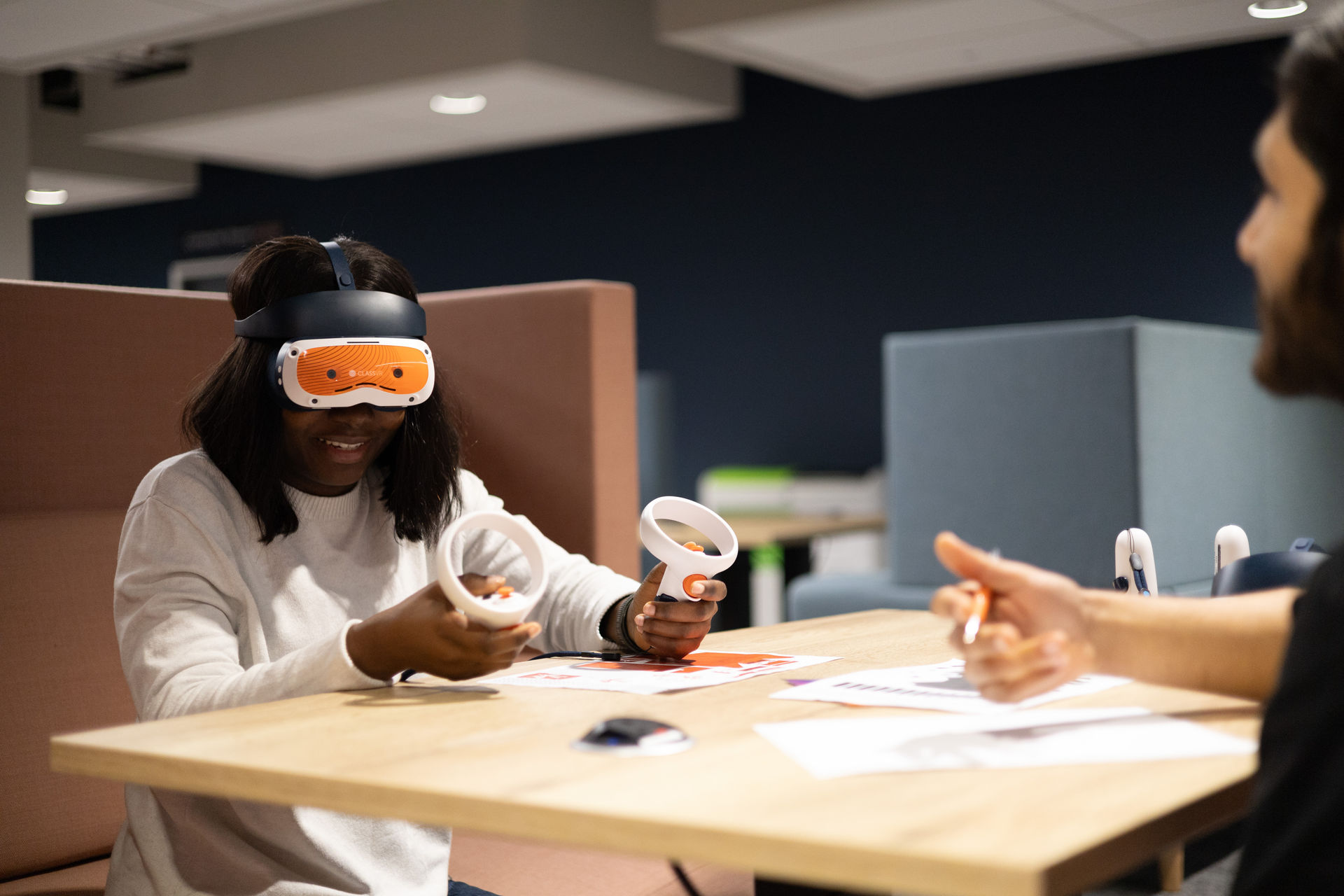
Explore
Immerse students in environments, systems and phenomena that would otherwise be difficult, expensive or impossible to access in the classroom.
.jpg?updatedAt=1786719782440)
Discover
Conduct virtual investigations, experiments and simulations that help students observe scientific processes, test ideas and understand complex concepts.
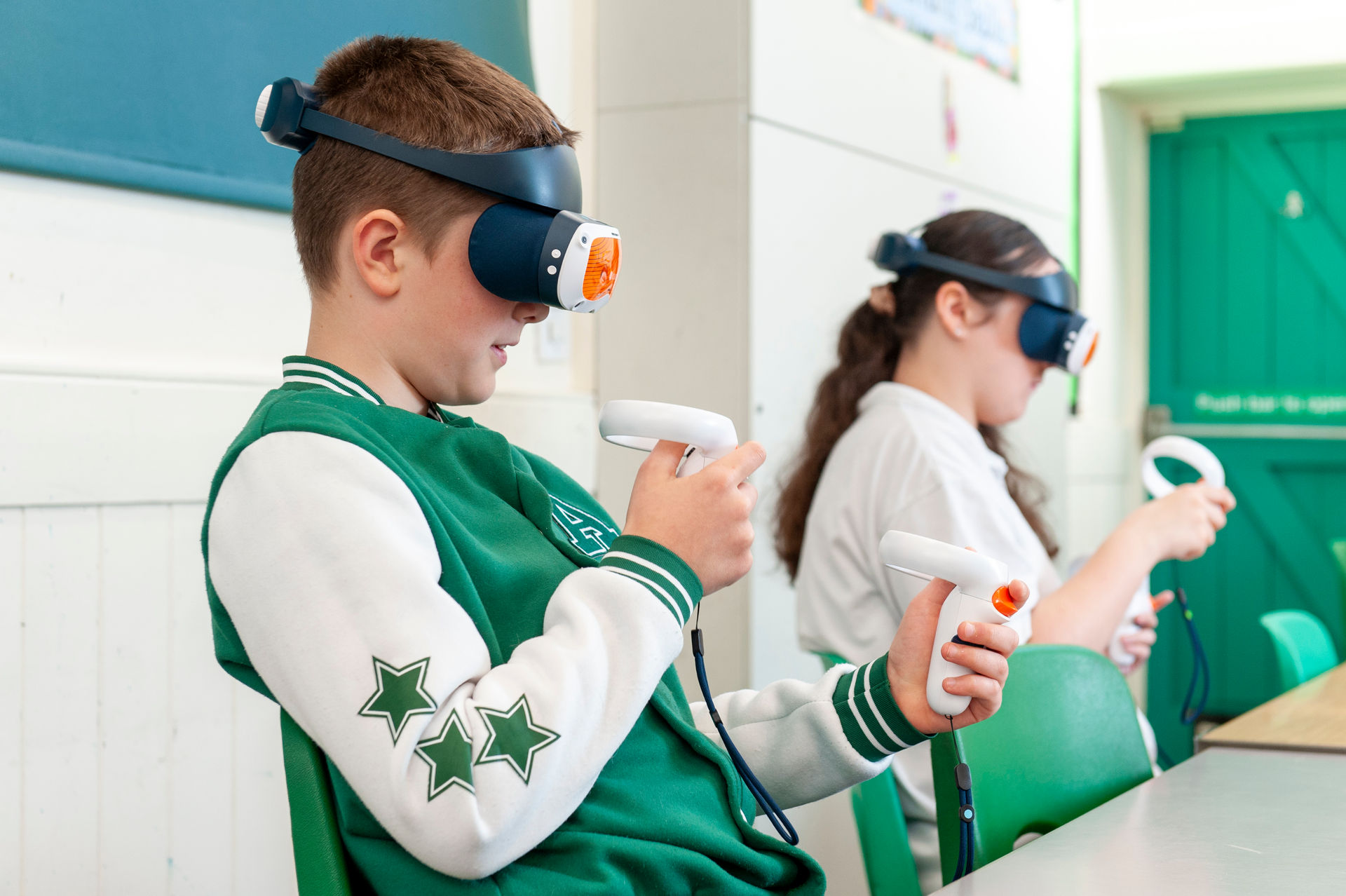
Design
Apply scientific knowledge, mathematics, computational thinking and engineering principles to solve real-world challenges.
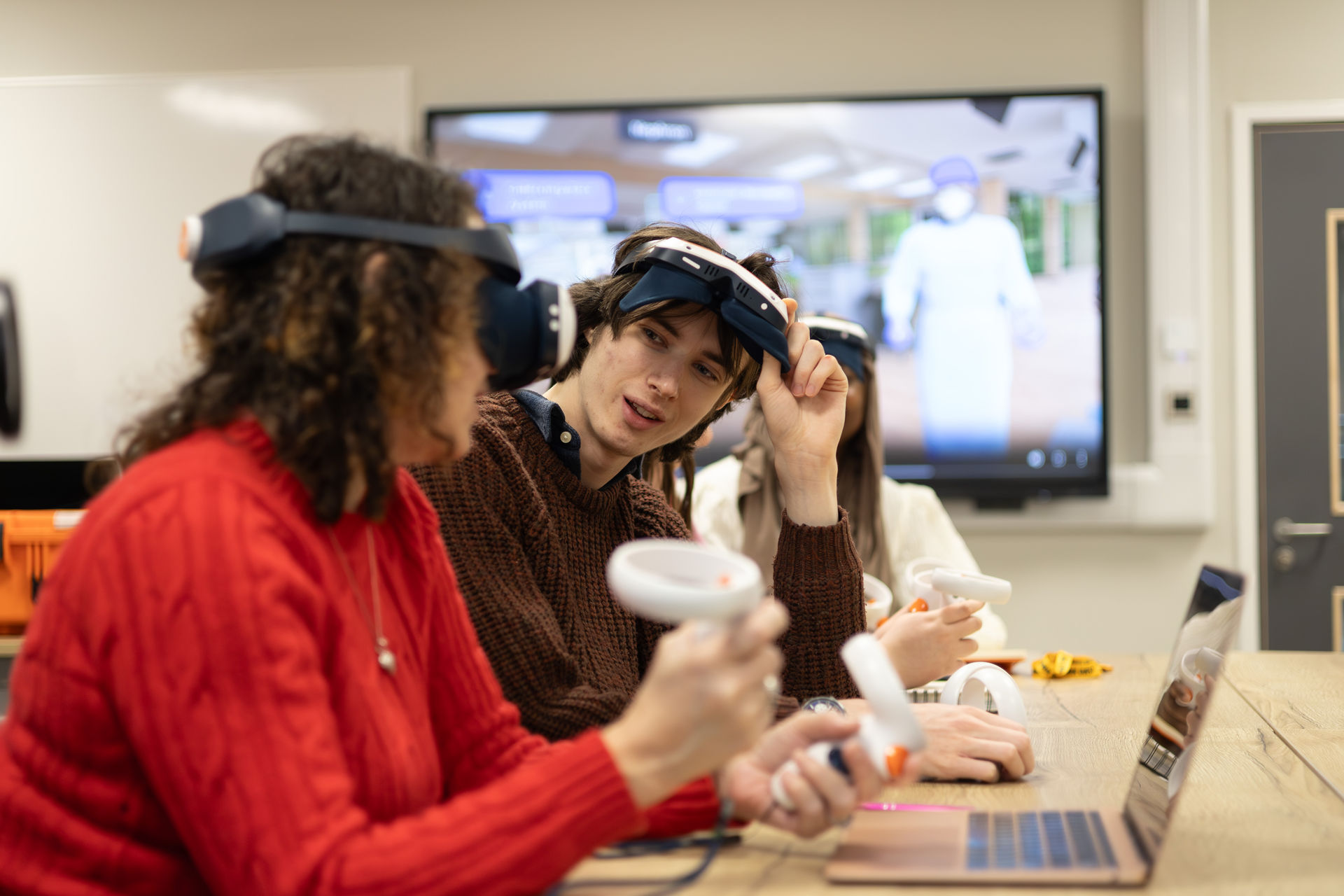
Create
Build models, simulations, robots and project solutions that demonstrate understanding, creativity and innovation.
Expertly Curated Content Across STEM
EduverseSTEM brings together ClassVR’s award-winning STEM content with immersive experiences from specialist education and XR partners, creating an expertly curated library spanning biology, chemistry, physics, engineering & technology, computing and more.
Students can investigate real-world concepts, conduct virtual experiments, solve engineering challenges and develop the critical thinking, creativity and problem-solving skills that underpin STEM learning.

A Complete Classroom Solution for STEM Learning
EduverseSTEM brings together ClassVR Xcelerate headsets, immersive STEM content, classroom and device management, teacher training and ongoing support, giving schools everything they need to deliver immersive STEM learning with confidence.
.jpg?updatedAt=1787046634057)
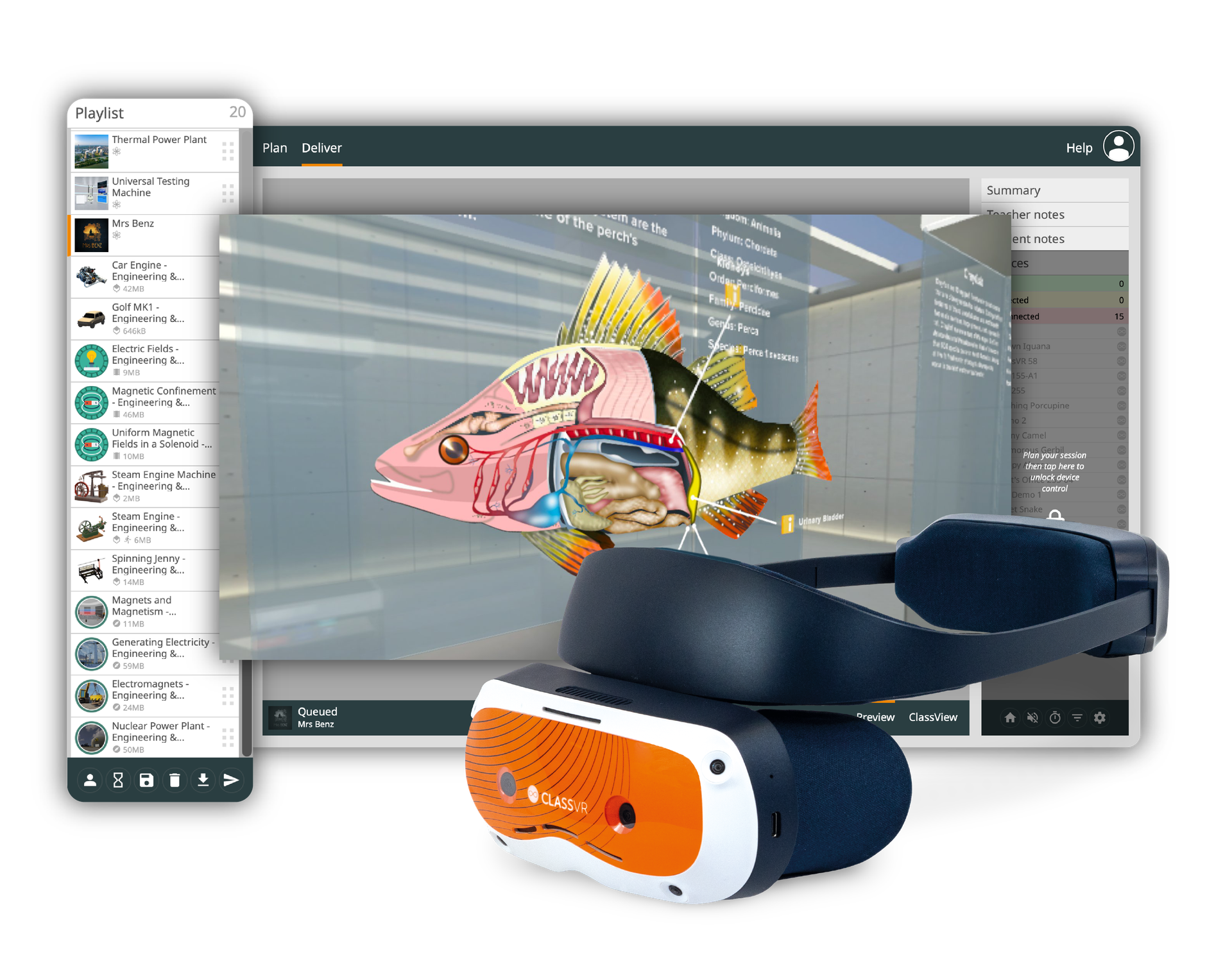
Lightweight Interactive Headsets
Includes ClassVR Xcelerate 6DoF headsets, ergonomically designed for safe, comfortable classroom use.
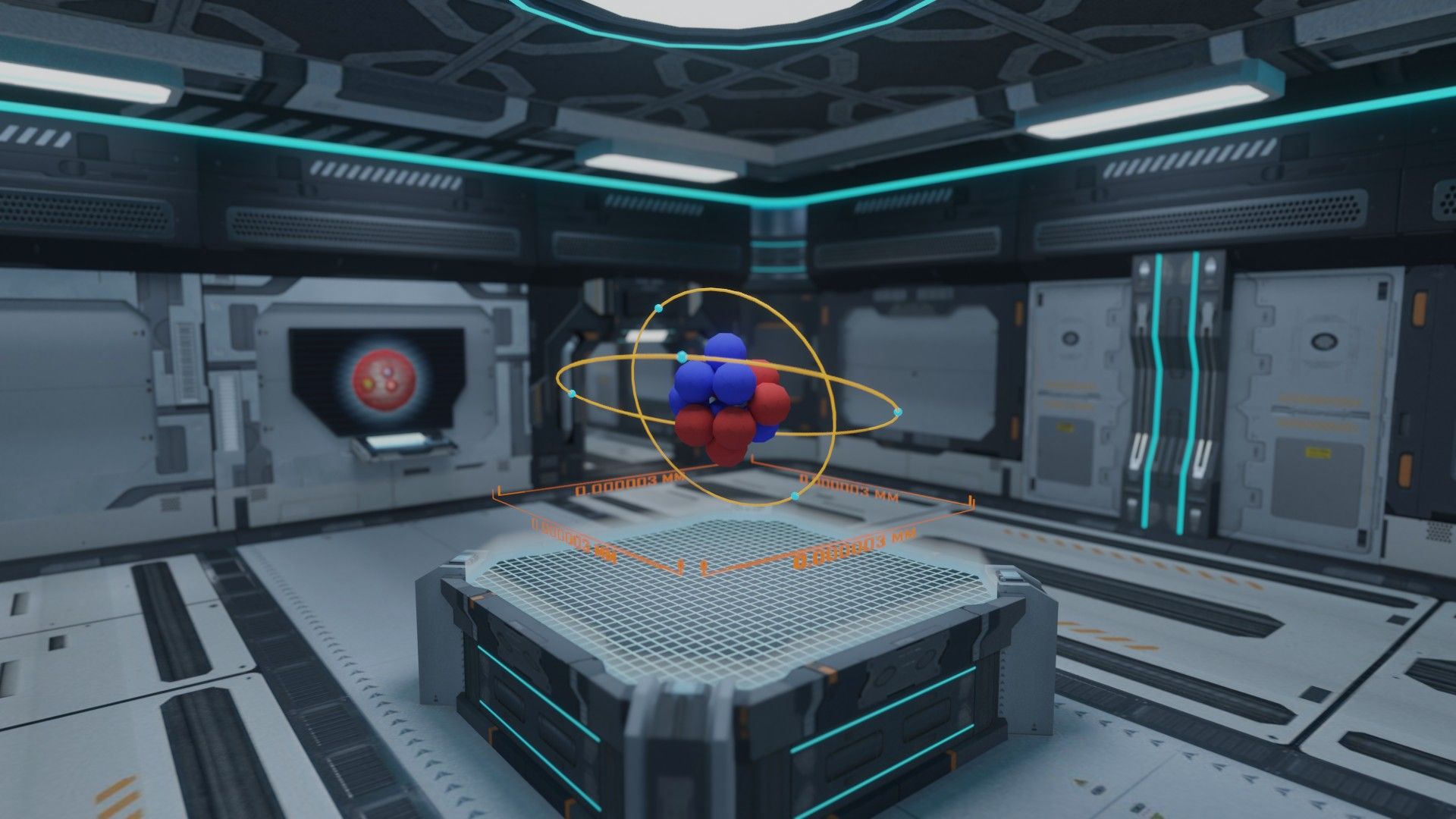
Interactive STEM Content
Includes 500+ expertly curated EduverseSTEM experiences from ClassVR and specialist content partners, plus the complete Eduverse curriculum library of immersive, curriculum-aligned content.
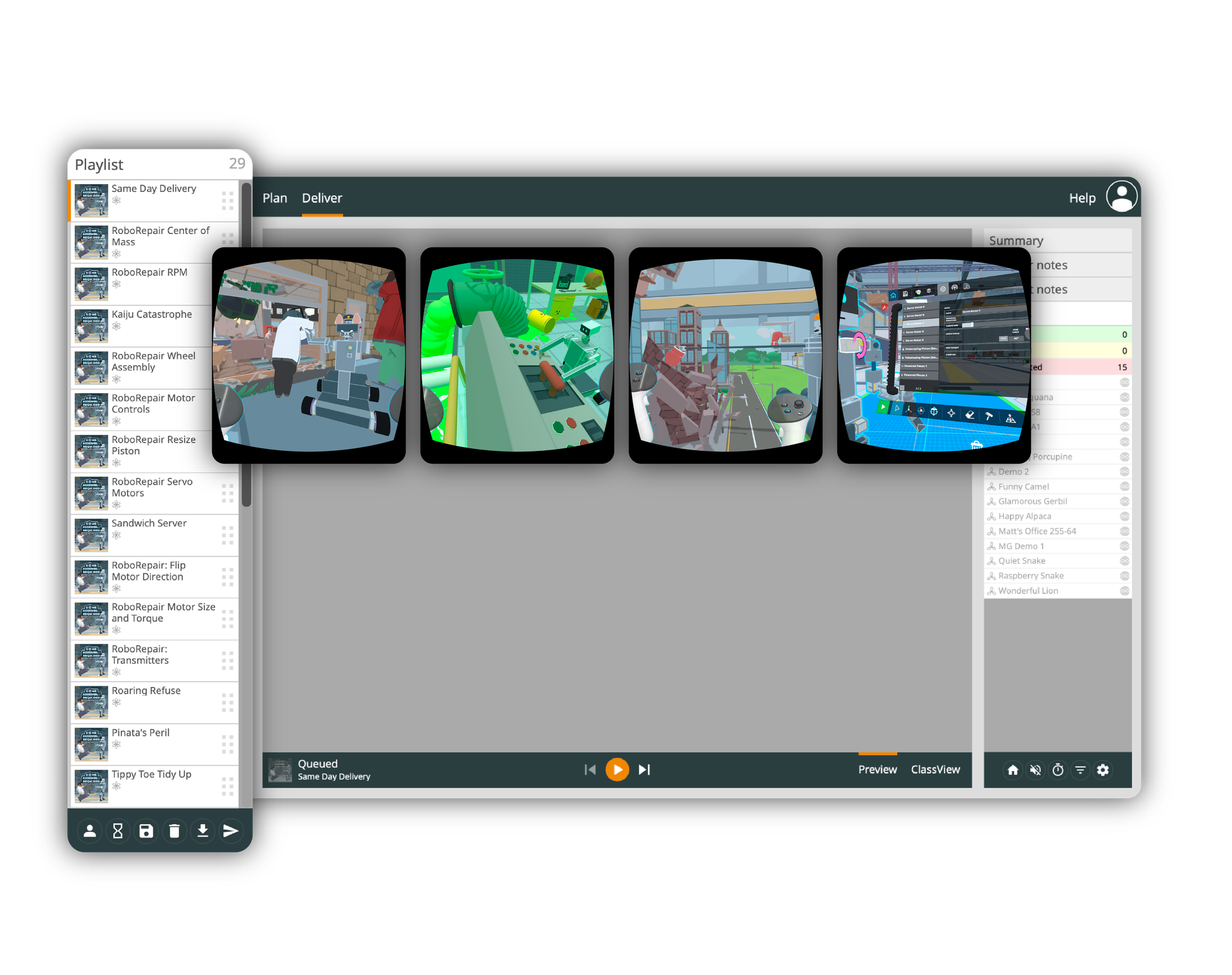
Classroom & Device Management
The ClassVR Portal gives teachers the tools to manage immersive learning across the classroom, including lesson delivery, real-time monitoring and headset management.
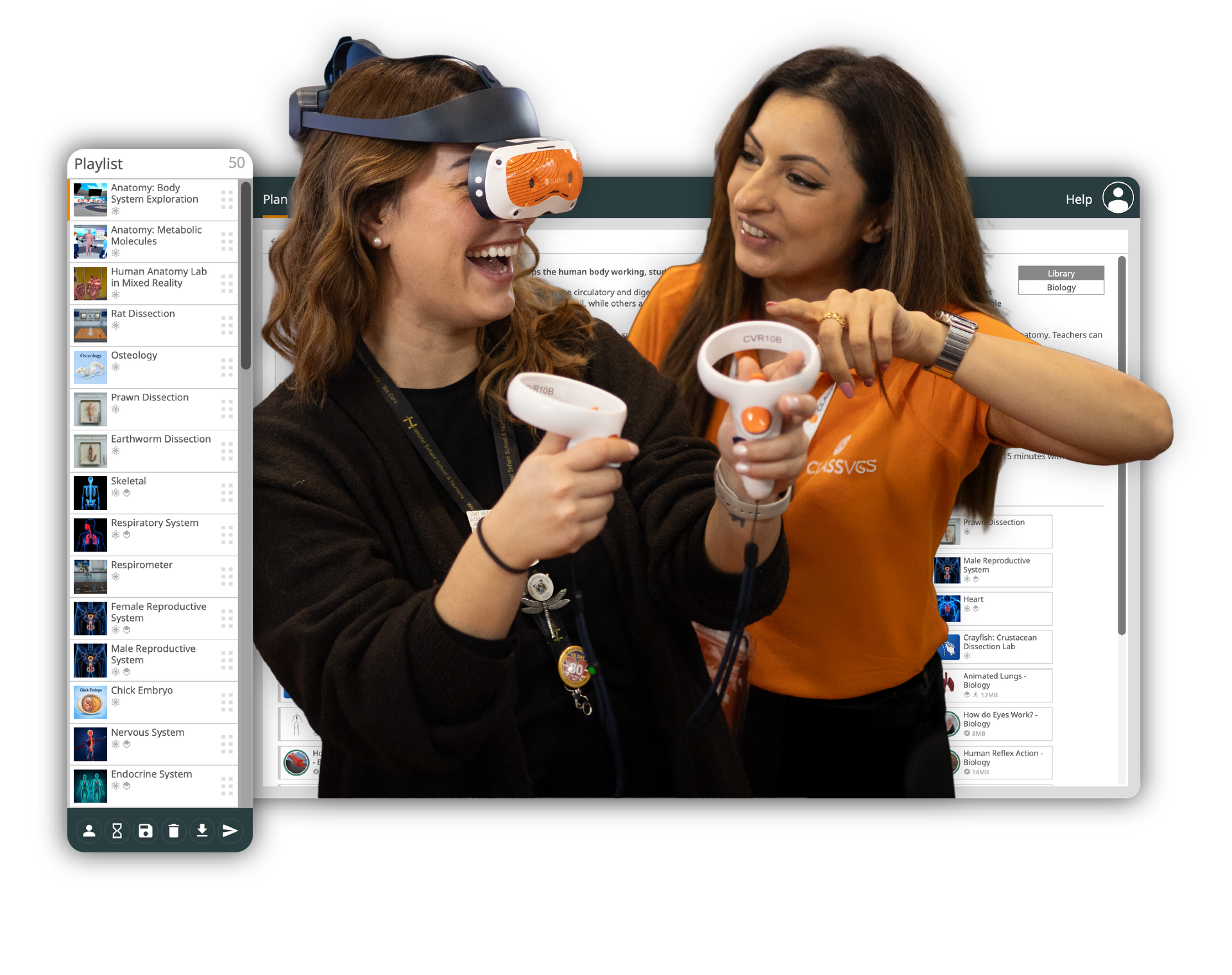
Training & Ongoing Support
Guided setup, teacher training and ongoing support help schools implement EduverseSTEM confidently and embed immersive STEM learning into everyday teaching.
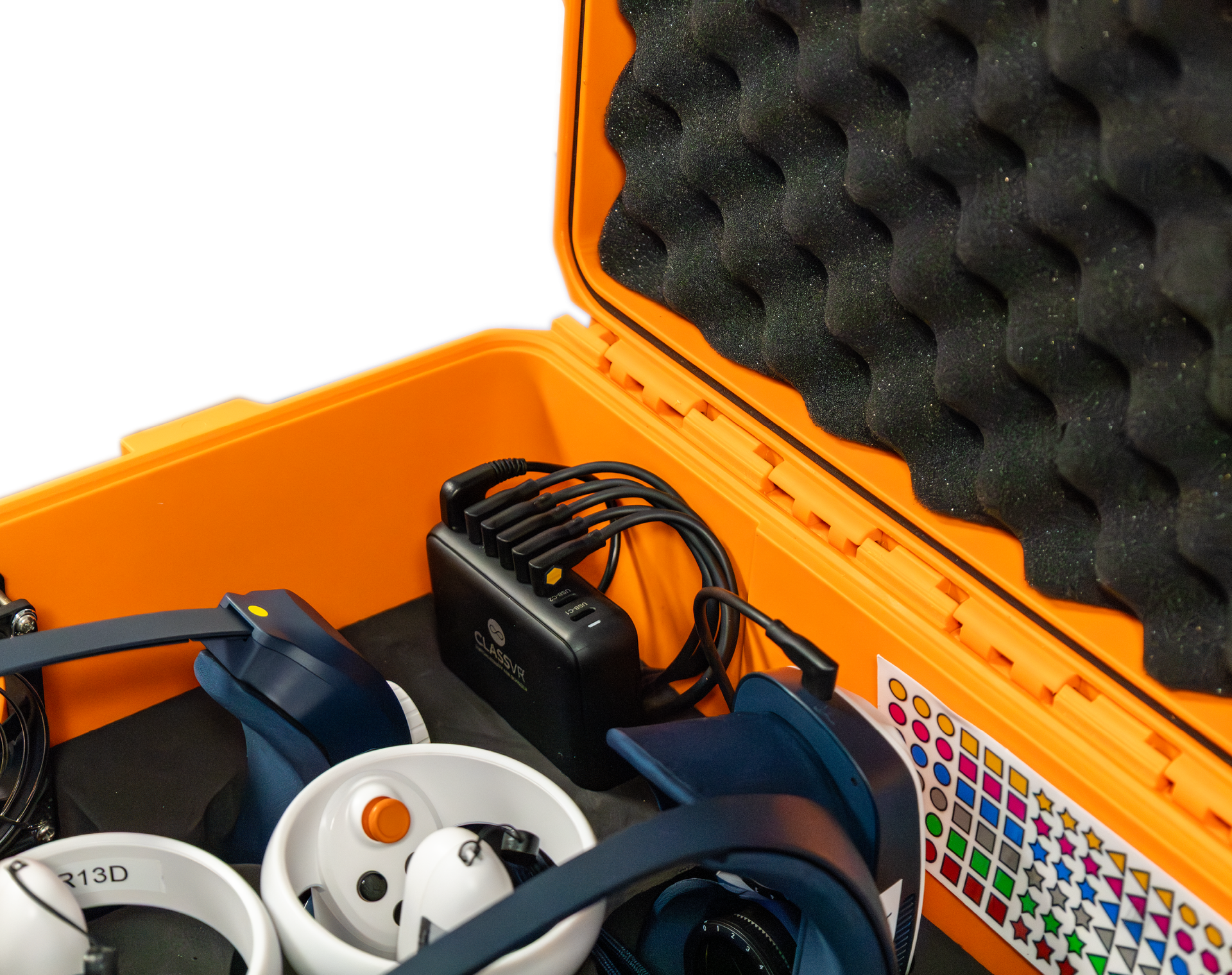
Safe Storage & Charging
Secure, lockable cases with built-in charging keep Xcelerate headsets protected, organised and ready for the next lesson.
One Platform. Multiple Ways to Experience STEM.
EduverseSTEM gives students hundreds of hours of curriculum-aligned STEM learning, with unlimited opportunities to create, build and demonstrate their own understanding. From virtual labs, experiments and simulations to interactive models, engineering challenges, coding, creation and extended project-based learning, students don’t just experience STEM, they investigate, apply and create within it.

Virtual Labs & Experiment
Interactive virtual laboratories where students
investigate scientific concepts, collect data, test
variables and carry out repeatable experiments
in a safe, controlled environment

Game-Based Challenges
Problem-solving experiences where students
apply STEM knowledge to complete tasks,
overcome challenges and test solutions in
engaging, goal-based environments.

Interactive 3D Models
Detailed, manipulable models that allow
students to explore objects, organisms, systems
and structures from every angle, zooming in to
examine features that are diffi cult to see in the
real world

Explorable VR Scenes
Immersive environments that place students
inside a concept, process or location. Learners
can navigate the scene, investigate points of
interest and uncover key information through
exploration.

Tours & Simulations
Guided experiences that take students through
real-world locations, systems or processes.
Students can observe how things work and
develop understanding through interactive
observation.

Virtual Dissections
Virtual dissections that allow students to
investigate anatomy and biological structures
without the need for physical specimens, with
opportunities to repeat and revisit learning.

Coding & Creation Projects
From robotics to building applications, students can learn to code, and build real life objects through a VR screen with our Computing content library.

Sandbox Build Environments
Open-ended creation tools that encourage
students to design, build, prototype and
experiment with their own ideas, promoting
creativity and innovation.


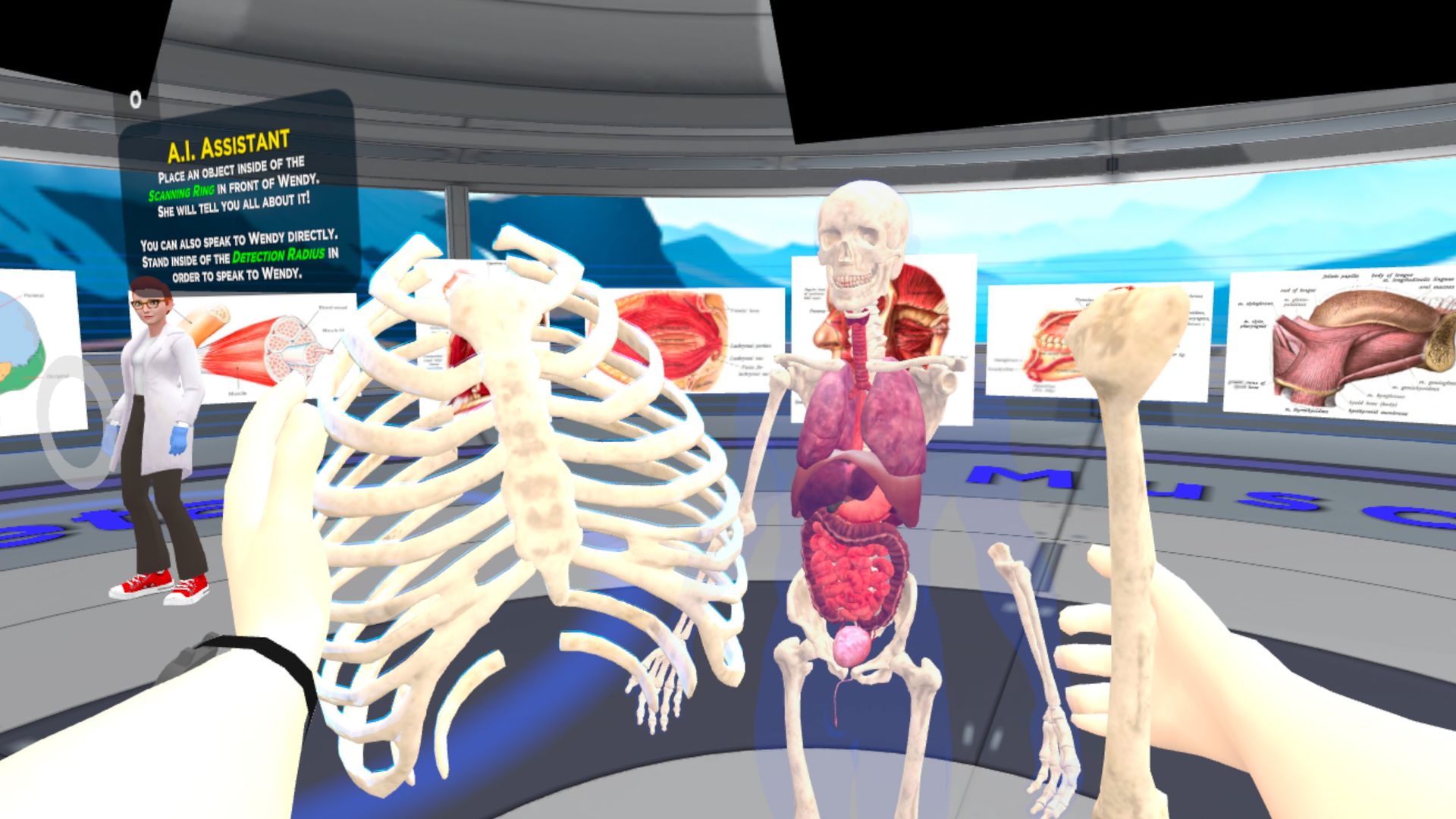

Explore the Living World from the Inside Out
From the human body to the microscopic world of cells, students investigate biological systems through immersive, hands-on experiences. Virtual dissections and repeatable investigations make complex concepts visible, accessible and engaging for every learner.
Experiences include: 172+ biology learning experiences, virtual dissections, human anatomy and physiology, genetics/DNA/cell biology and microbiology, ecology and environmental science, biological investigations and experiments, interactive anatomy models and AI-supported exploration.
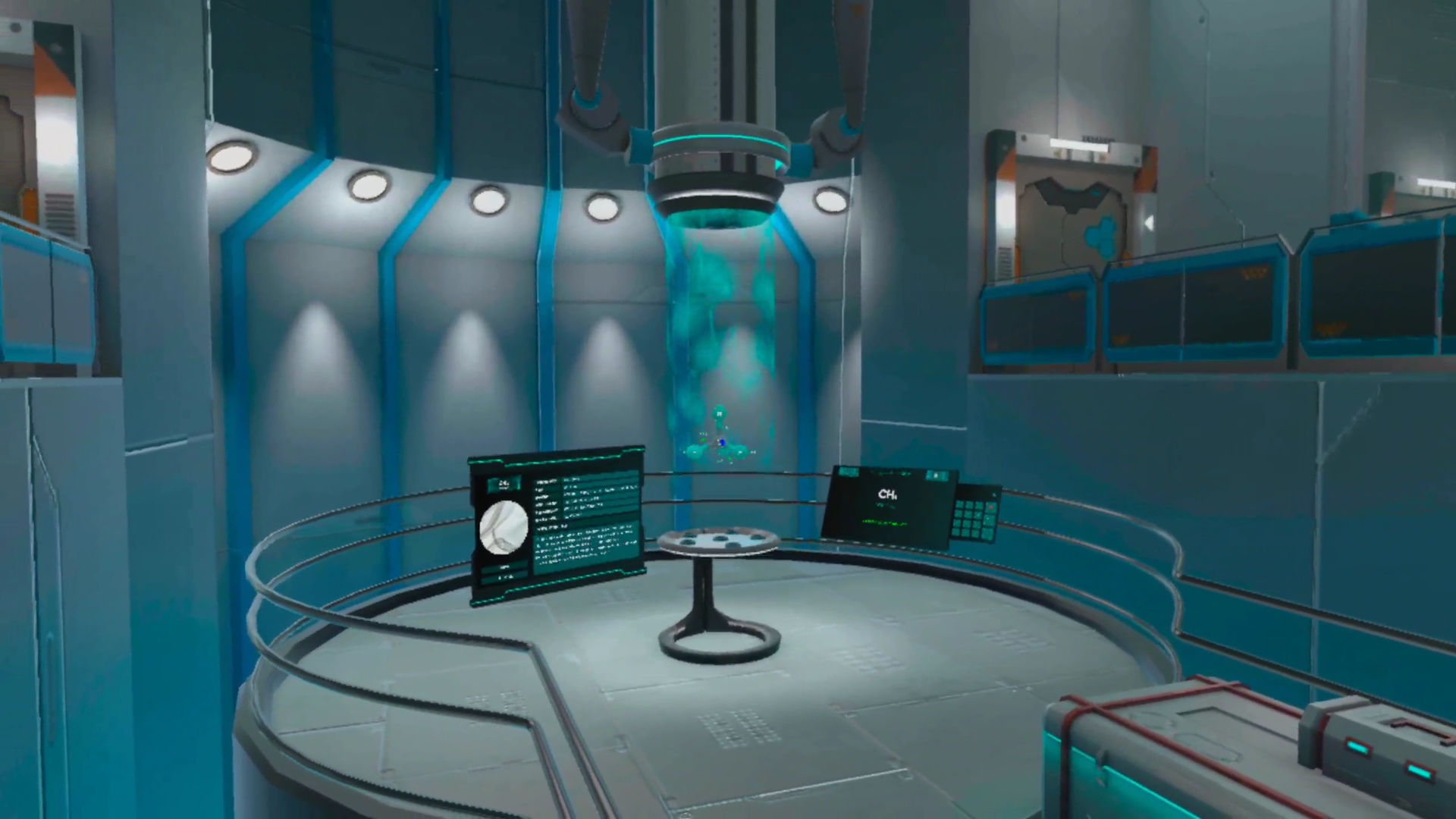

Experiment Safely, Understand Deeply
From atoms and molecules to complex chemical reactions, students investigate chemistry through immersive, hands-on experiences. Virtual experiments remove the constraints of consumables, equipment and safety risks, allowing every learner to experiment, repeat and refine their understanding.
Experiences include: 130+ chemistry simulations and investigations, atomic structure and bonding, molecule construction and visualization, chemical reactions, chromatography, spectroscopy, acids/bases/titration, electrochemistry.

Experience Physics Beyond the Textbook
From forces and motion to electricity, waves and energy systems, students investigate physics through immersive simulations and virtual experiments. Concepts that are often difficult to visualize become visible, interactive and easier to understand through direct exploration and testing.
Experiences include: 90+ physics simulations and experiments, forces and motion, electricity and circuits, waves and optics, mechanics
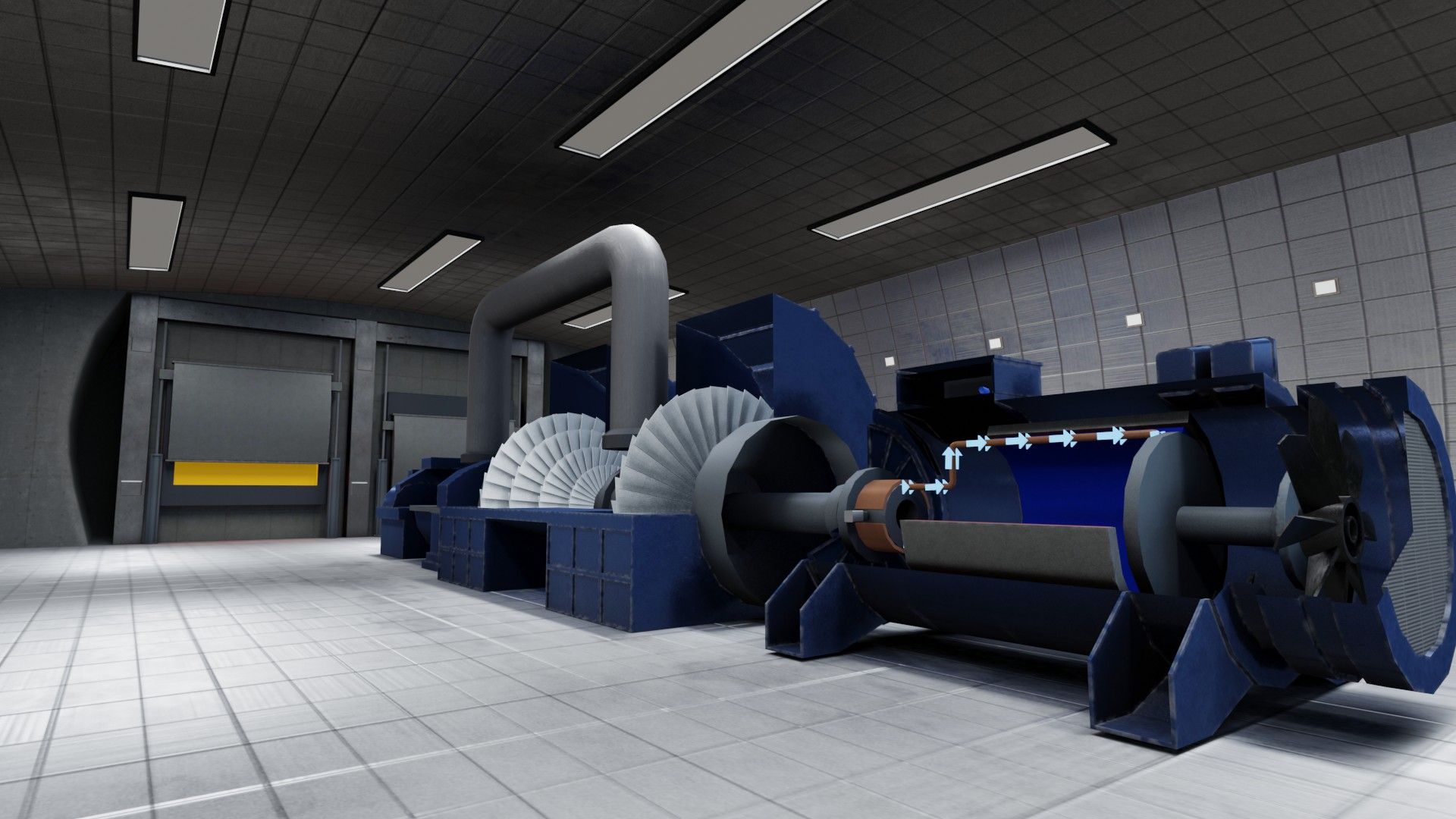

Step Inside the Design Process
From robotics and automation to mechanical and civil engineering, students apply mathematics, data analysis and engineering principles to solve real-world problems through immersive, hands-on experiences. By building, testing and refining solutions, they develop the technical knowledge, problem-solving abilities and design-thinking skills needed to tackle complex engineering challenges.
Experiences include: engineering design challenges, robotics and automation, mechanical systems, power generation, manufacturing concepts, career exploration, design-thinking challenges, engineering problem-solving projects.
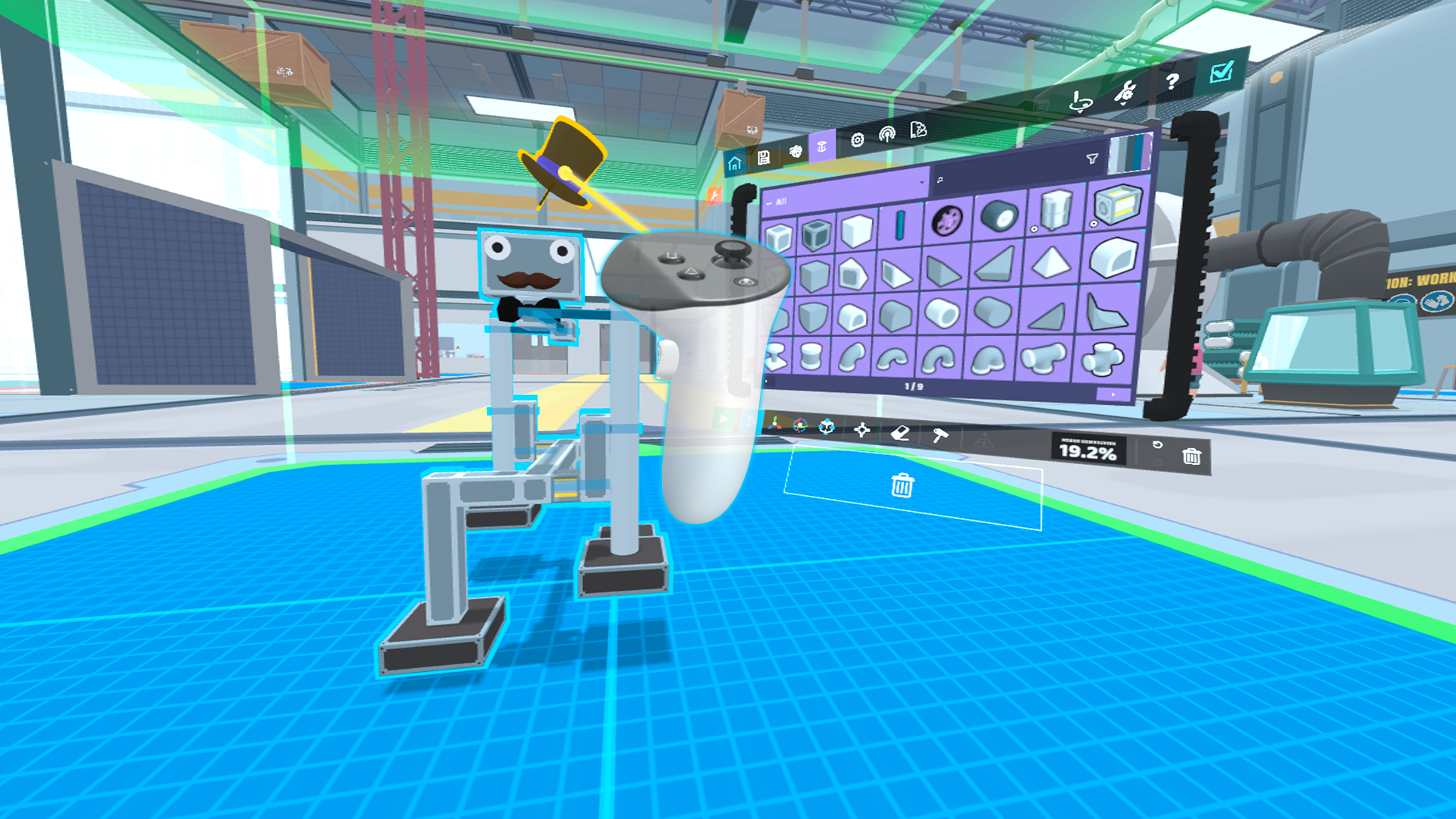

Turn Students from Consumers into Creators
From coding and computational thinking to game development and immersive content creation, students develop the skills to design, build and create with technology. An open coding platform enables learners to create their own VR experiences, progressing from block-based coding to TypeScript while applying creativity, logic and problem-solving in meaningful ways.
Experiences include: coding and programming, computational thinking, 3D design and modeling, game and world creation, AR and VR content creation, AI-assisted creation tools, collaborative digital projects.
.jpg)

Apply STEM Knowledge to Real-World Challenges
EduverseSTEM’s Gold Standard Project-Based Learning Framework extends learning beyond simulations and content exploration into authentic project work. Each project is built around a compelling driving question, guiding students through a sustained process of investigation, design and engineering before culminating in a live pitch where they present and defend their solutions. Five ready-to-teach projects are included, covering challenges from building a space station to restoring a coral reef, with full teacher guidance provided.
.png?updatedAt=1785858278686)
The M in STEM Woven-in, not Bolted on
There is no standalone math library, because in the real world, math doesn’t stand alone. Measurement, data analysis, modeling and quantitative reasoning appear in every subject library, in every experiment, in every engineering challenge. EduverseSTEM gives math teachers the applied contexts their subject has always needed: students aren’t practicing equations in isolation, they’re using them to get a result that matters.
Designed Specifically for Education
Every EduverseSTEM module is mapped to recognised curriculum standards, NGSS. The project-based learning layer adds a Gold Standard PBL framework aligned to PBLWorks and Cambridge Global Perspectives, with full teacher guidance, session plans, curriculum objectives and key vocabulary for every project
What are the Benefits of VR for STEM?
STEM is learned best by doing. However providing regular opportunities for practical investigation can be challenging when physical labs bring costs, equipment, preparation, time and safety considerations. Immersive learning expands what is possible, giving students more opportunities to investigate, experiment, manipulate, test and repeat, without replacing the value of hands-on practical science.
Focused Immersion. Shared Learning.
VR is most powerful when used with purpose. Short, focused sessions of 5–15 minutes can introduce a concept, support an investigation or provide a shared experience before students return to discussion, practical work, problem-solving and creation.
With a common experience to draw upon, students can question, explain and discuss what they have observed together, while screen time remains focused, bounded and purposeful.
Make the Abstract Visible
Some STEM concepts are difficult to understand because they are too small, too large, too complex or impossible to observe directly.
VR lets students step inside structures, systems and processes in 3D, from cells and anatomy to forces, environments and engineering systems, helping connect scientific theory with something they can see, explore and interact with.
Experiences Beyond the Limits of the Classroom
Take students where the classroom cannot – from inside the human body to the surface of Mars and provide access to experiences that could otherwise be difficult, expensive, unsafe or impossible to deliver.
Immersive learning expands the range of STEM experiences schools can provide without being constrained by location, specialist equipment or physical resources.
More Opportunities to Learn by Doing
Give students access to virtual labs, experiments, simulations and interactive investigations that complement physical practical work.
Students can manipulate variables, test ideas, observe outcomes and repeat investigations, building the confidence to explore what happens, understand why and try again.
Experience EduverseSTEM
Frequently Asked Questions
What is a 6DoF VR headset?
6DoF stands for Six Degrees of Freedom, describing the six ways your head and body can move – up/down, left/right, forward/backward, and rotational movements like pitch, yaw, and roll. A 6DoF Virtual Reality headset enables full spatial interaction, allowing you to move naturally within a digital environment.
Our Xcelerate 6DoF VR headset delivers advanced XR technology, exceptional comfort, and powerful classroom controls.
Why are schools turning to VR for STEM teaching?
STEM uptake and attainment remain a national priority, and Ofsted increasingly looks for evidence that schools are using technology to widen access and deepen understanding, not just as a novelty. VR for STEM addresses three problems teachers raise consistently: abstract concepts that are hard to visualise, a lack of budget or safety allowance for real-world field trips and lab equipment, and the challenge of engaging pupils who disengage from STEM subjects
With a class set of ClassVR headsets, a teacher can take a whole class inside the human circulatory system, onto the surface of Mars, or into a working circuit board — then bring them straight back to a worksheet or discussion, all within a single lesson.
How VR works in a STEM classroom?
Teachers control the lesson from a single tablet, pushing content to every headset at once, pausing the group, or highlighting one pupil’s view on the classroom screen. Content is pre-loaded and works offline, so there’s no reliance on classroom Wi-Fi holding up mid-lesson. Sessions are typically 15–20 minutes of immersive time within a standard lesson, with built-in discussion prompts and worksheets so VR supports the lesson objective rather than replacing it.
Can Xcelerate use all content within the existing Eduverse and Eduverse+ subscriptions?
Content within the Eduverse is compatible with the Xcelerate Headset; however, Eduverse+ is not.
Can I Buy EduverseCTE and EduverseSTEM?
Lorem ipsum dolor sit amet, consectetur adipiscing elit. Curabitur eu erat eget neque pulvinar dignissim. In quis suscipit nisl. Donec a dolor blandit, ultricies magna at, tempus felis.
How can VR be used to teach soft skills?
VR simulations allow students to practice communication, teamwork, problem-solving, and leadership in realistic scenarios. With AI-driven feedback on eye contact, clarity of speech, and body language, they can build confidence while rehearsing activities such as job interviews, public speaking, and pitching ideas.