

Virtual and Augmented Reality for Special Education
Virtual Reality to Support All Types of Learning
Available to Schools through IDEA funding
VR in Education for Special Education
Students with Special Educational Needs and Disabilities often benefit from learning experiences that go beyond traditional methods. Virtual Reality (VR) and Augmented Reality (AR) open new opportunities by offering safe, immersive, and multi-sensory environments that can be personalized to each learner.
With tools like ClassVR, teachers can adapt content to individual needs, reducing barriers, supporting communication, and creating calming or stimulating spaces as required. These experiences not only make learning more accessible but also help learners build confidence, develop social and emotional skills, and actively participate in their education.
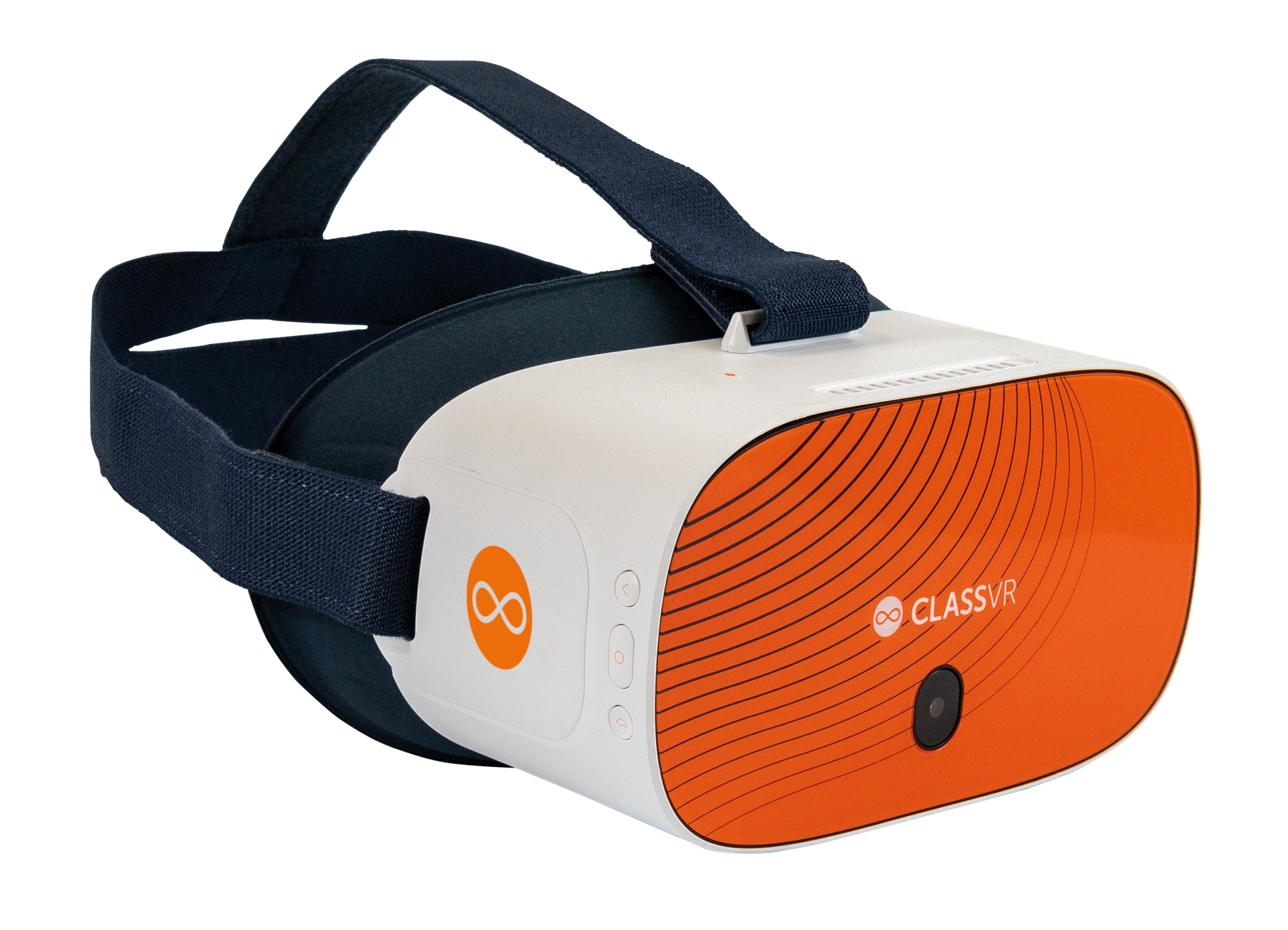
The Xplorer Headset: Enhancing Learning for SpEd Students
Why Schools Choose ClassVR for Special Education / SpEd
- Tailored SpEd Resources
- Supports Emotional Regulation
- Inclusive Learning Opportunities
- Builds Confidence & Familiarity

+

A complete classroom solution for well-being and inclusion
This solution combines ClassVR Xplorer headsets, the EduverseTHRIVE well-being and inclusion content library, classroom and device management, training, and support, giving schools everything needed to deliver immersive well-being support confidently in the classroom.
ClassVR Headsets
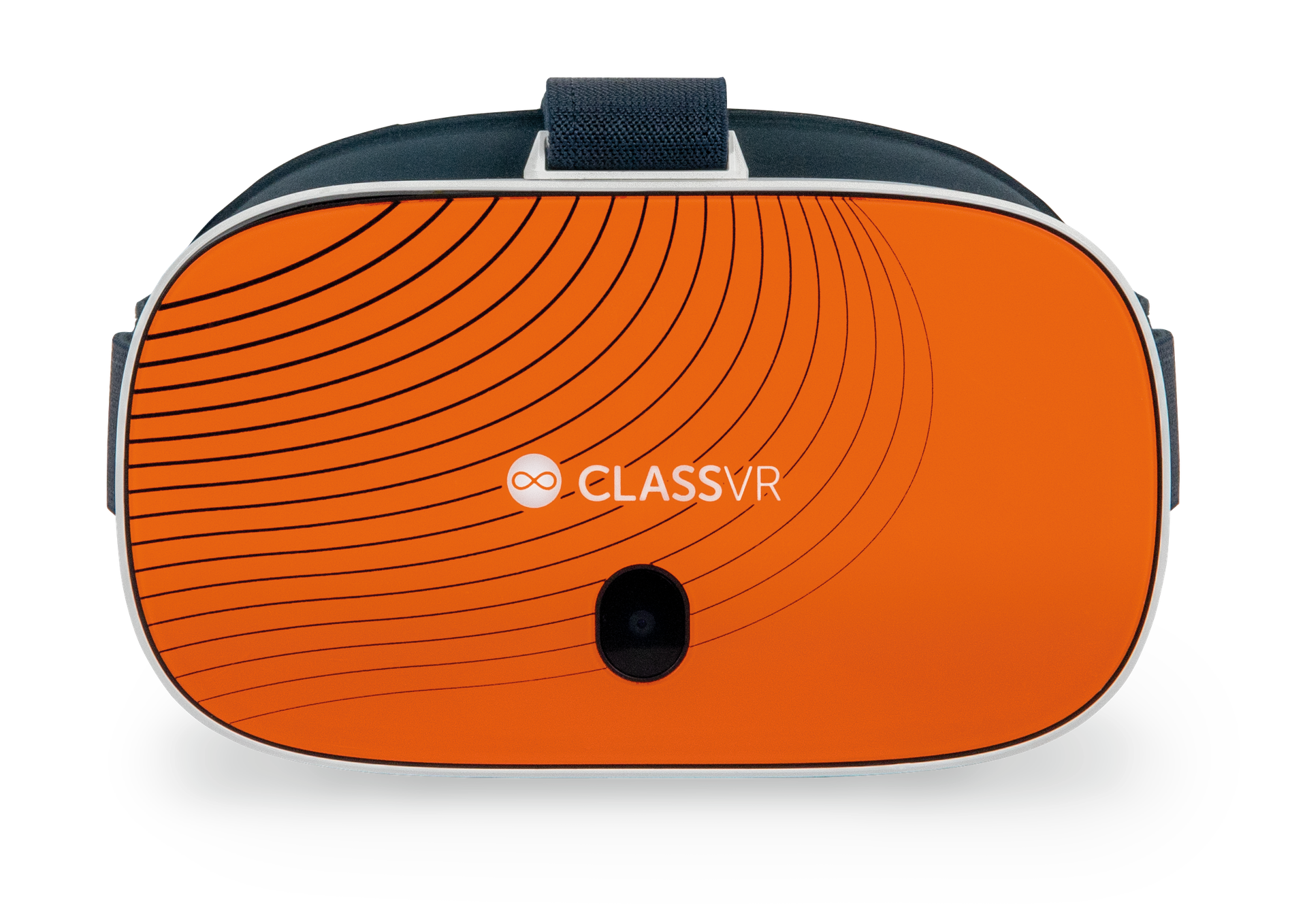
Includes four or eight ClassVR Xplorer 3DoF headsets, ergonomically designed for safe, comfortable classroom use.
EduverseTHRIVE Content
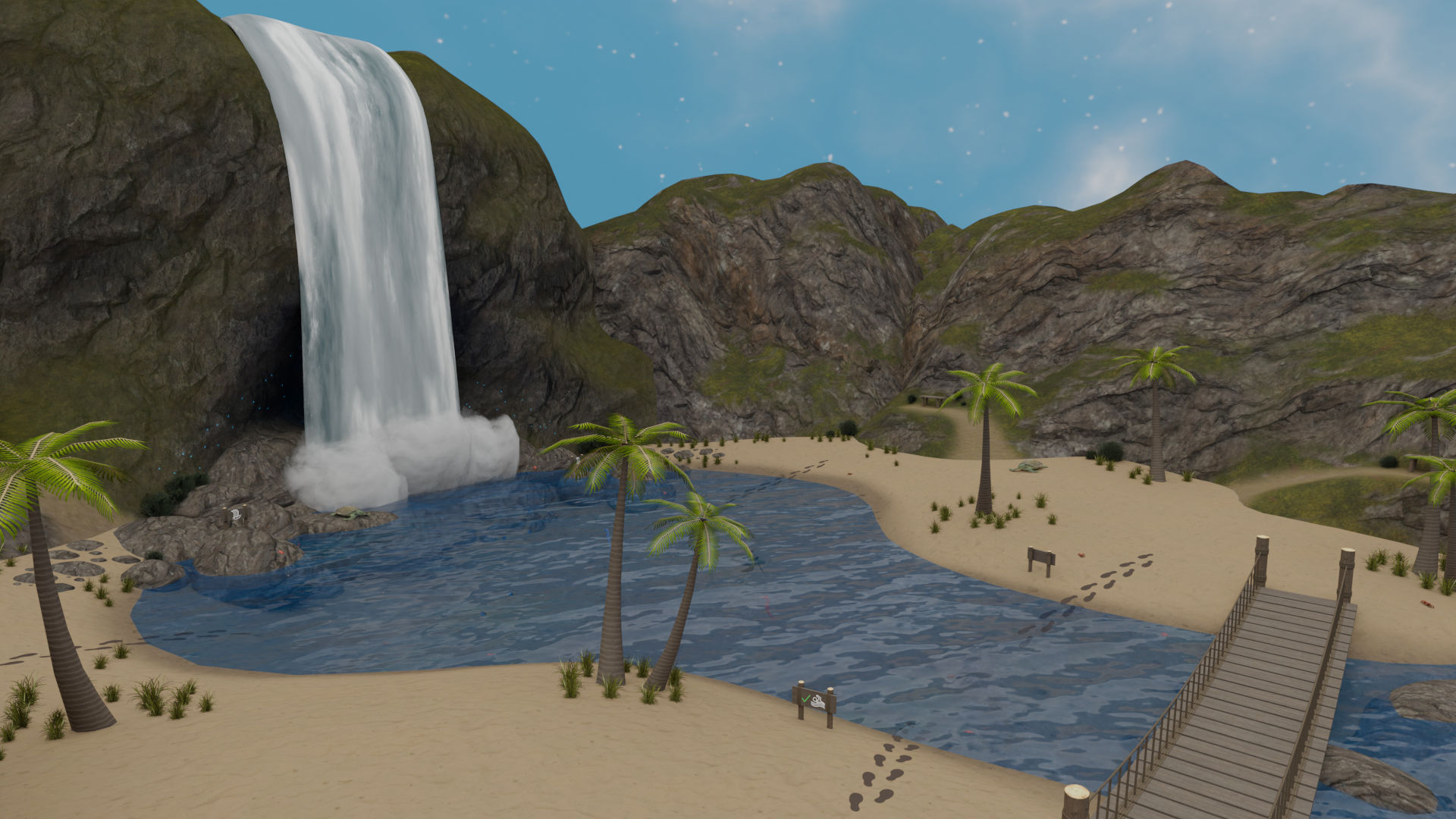
An EduverseTHRIVE device licence provides access to immersive experiences supporting emotional regulation, well-being, readiness to learn, and inclusion, designed for flexible, in-the-moment use.
Classroom & Device Management
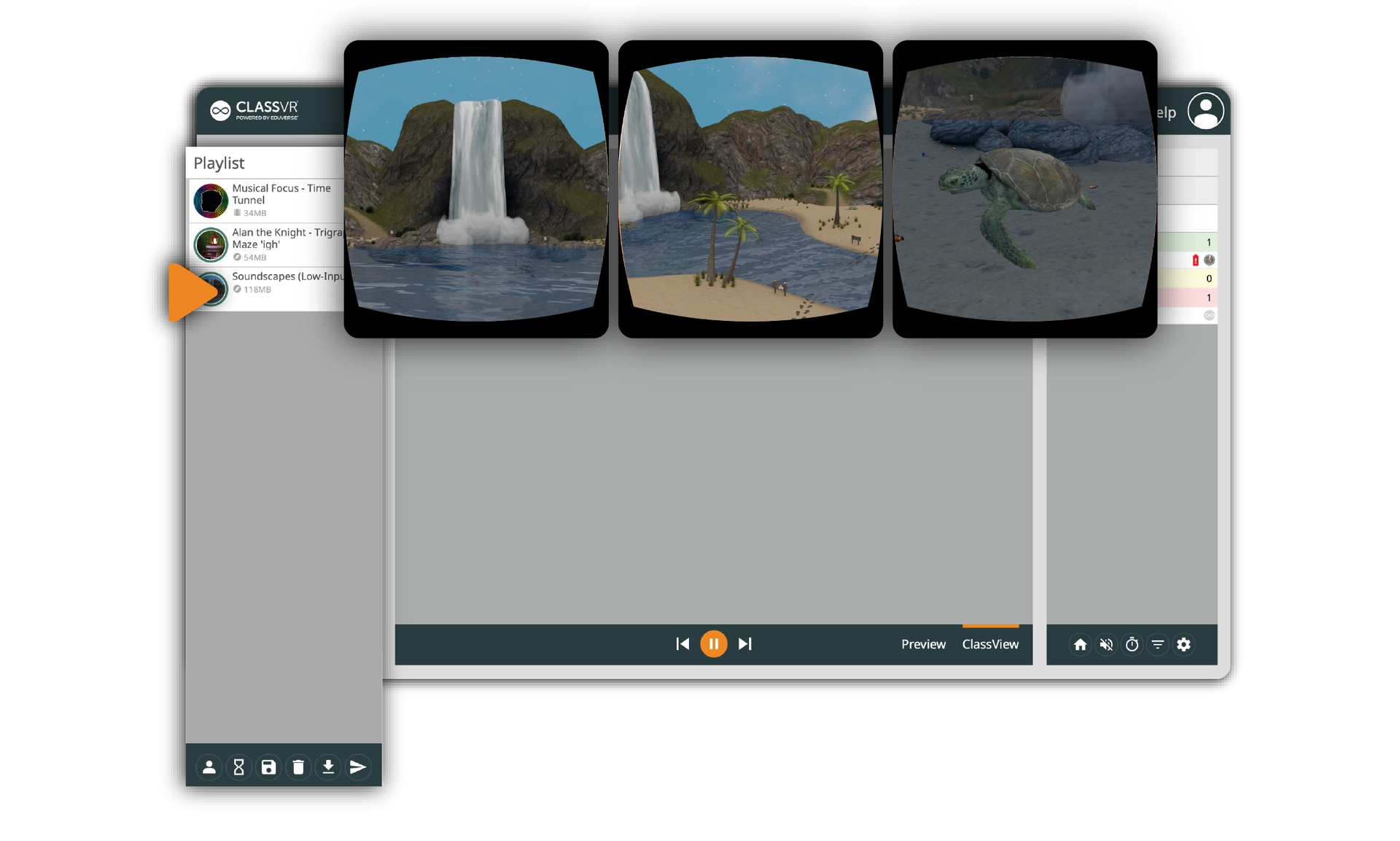
Integrated classroom management enables real-time monitoring, session control, built-in MDM, and centralised device management with analytics in one platform.
.png)
Training & Ongoing Support
Guided setup and teacher training support simple, confident implementation, with clear guidance for embedding well-being support into everyday practice.

Safe Storage & Charging
Secure, lockable cases with built-in charging keep devices protected and lesson-ready.
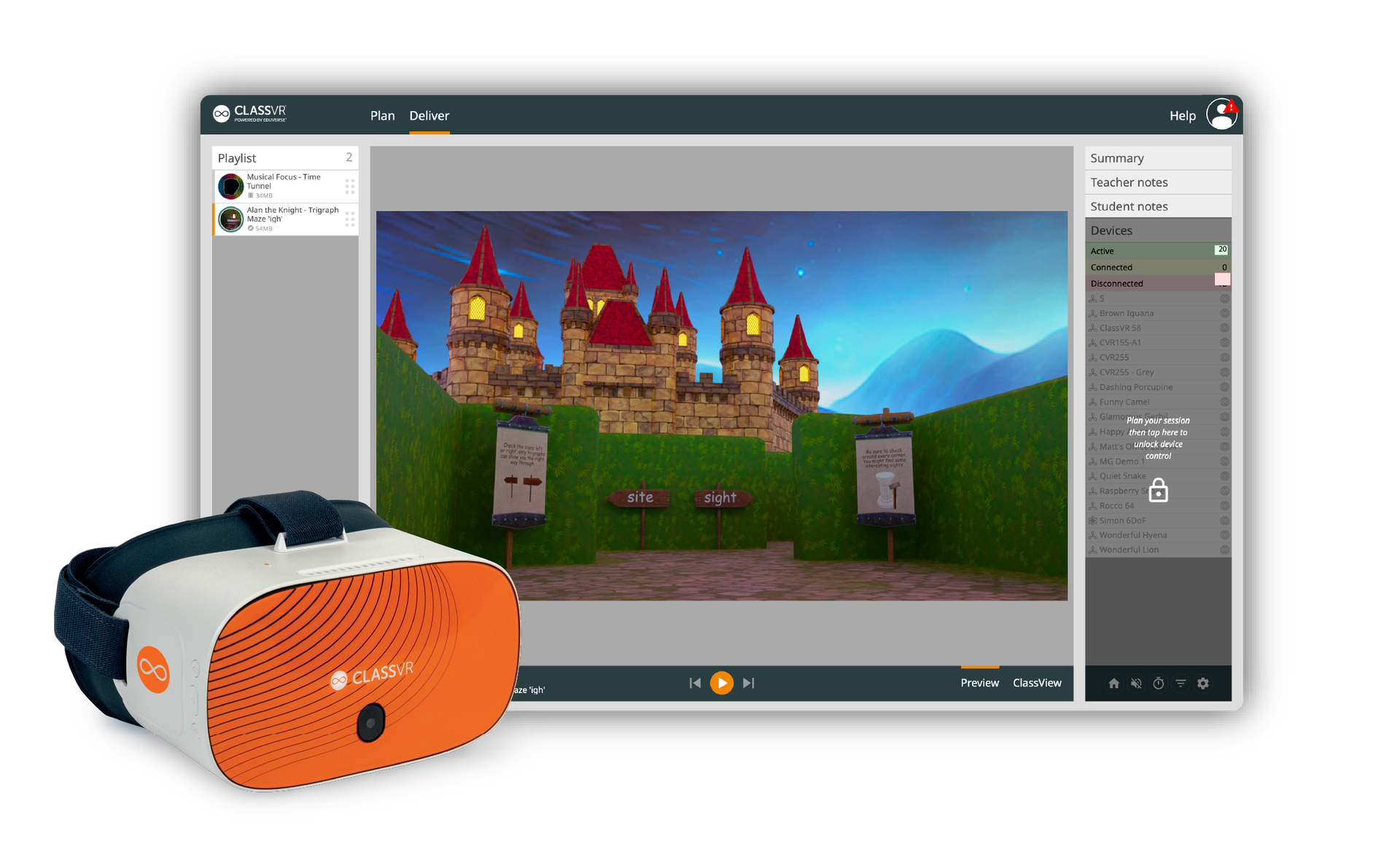
Device Management
Simplify school IT with ClassVR, centralised device management, remote monitoring and analytics in one platform.
How VR/AR Benefits Special Education
Calm and Emotional Wellbeing
Many Special Education / SpEd students experience sensory overload in busy school environments.
ClassVR offers calming virtual sensory rooms, soothing natural soundscapes, and interactive experiences proven to support emotional regulation and create a sense of calm.
Making Every Experience Accessible
Many students with mobility or sensory challenges miss out on trips and everyday experiences.
With ClassVR , every learner can discover the world; exploring vibrant cities, natural wonders, or even underwater adventures through immersive 360° content
Confidence Through Familiarity
New environments, transitions, and field trips can cause anxiety for some Special Education / SpEd learners. ClassVR provides safe opportunities to rehearse experiences through 360° images and videos, helping students build familiarity and confidence before real-world visits.
Engaging Every Learning Style
For students with language-based learning differences, text-heavy lessons can create barriers.
ClassVR makes learning visual, active, and hands-on. With the AR Cube, objects come alive in students’ hands, supporting visual learners, building understanding, and boosting engagement.
Find out how ClassVR can transform SpEd learning in your school
Inclusive Innovation – The Power of VR in SpEd Learning
Discover how virtual reality supports special education, providing new ways to engage and include every learner.
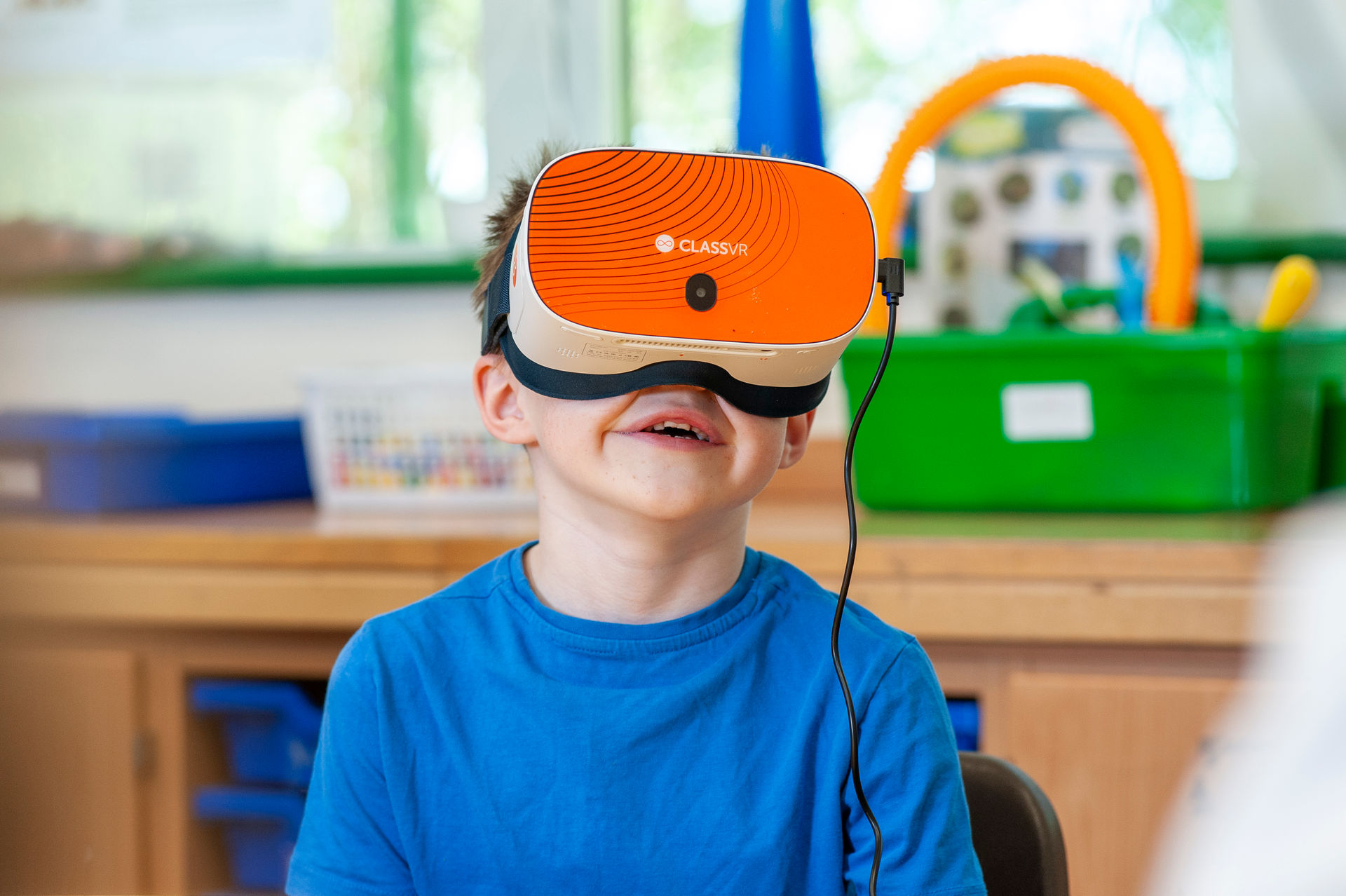
Meet Eduverse THRIVE – immersive experiences to reset and regulate
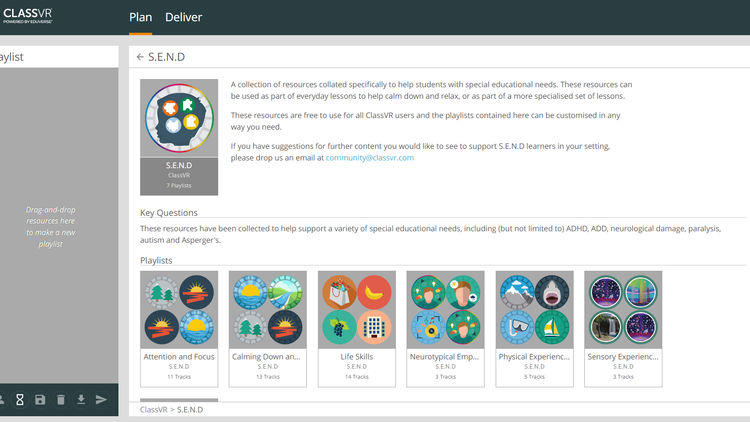
Supporting Educational Needs with Virtual Reality

The Role of VR in Special Education
How Schools Used VR to Support SpEd Students
See how immersive technology opens doors for Special Education / SpEd learners, making education more engaging and inclusive.
Allentown District
By harnessing VR/AR/XR we were able to remove the conformity hurdles that students with additional considerations often face and foster a renewed sense of empathy – or more importantly, neuroempathy.

Winton Woods City Schools
Winton Woods use ClassVR to boost student confidence, letting learners preview new experiences in a safe, virtual space.
Frequently Asked Questions
What is virtual reality?
The easiest way to explain virtual reality or “VR” is through your senses. Imagine you’re at the seaside. How do you know you’re by the ocean?
The answer is through using your senses. You can see the water, hear the waves, feel the sand…
Virtual reality works in exactly the same way! You’re presented with information that your senses tell your brain are reality. The only difference is that this information is provided through technology. So instead of standing on a real beach, you’ll see a 360° or video of the ocean, hear a recording of the waves, but it feels like you are actually there.
Read our blog to find out more here.
How can VR support Special Education learners?
Virtual Reality is a powerful tool for supporting Special Education learners when used within the education sector.
Virtual Reality allows Special Education / SpEd students to learn and explore new situations within a safe, controlled environment helping reducing anxiety about exploring new placing and increasing confidence in handling immersive tasks.
VR offers a new approach to learning that goes beyond a textbook, creating a multi-sensory learning experience where sight, sound make lessons more engaging and abstract concepts easier to grasp.
For students with sensory processing needs, VR can provide calming, structured environments that help regulate emotions before returning to classroom learning.
What types of special education needs can benefit from VR?
Virtual Reality can support a wide range of Special Educational Needs and Disabilities by offering immersive, personalized, and low-pressure learning environments.
Here’s a breakdown of the types of SpEd that can benefit most:
- Autism Spectrum Conditions – ClassVR offers role-play scenarios to help develop social and communication skills, along with sensory immersive scenes to support emotional regulation.
- Attention Deficit Hyperactivity Disorder – increase focus and attention in lessons by using immersive content that’s engaging and interactive.
- Speech, Language and Communication Needs – visual prompts and immersive storytelling aid language development, VR has also been proven to encourage expressive and receptive communication.
- Physical Disabilities – VR enables access to new environments and experiences that may be physically inaccessible, like safaris and mountain tops.
- Social, Emotional, and Mental Health – calming sensory experiences to lower stress and anxiety.
Can VR be used in group settings?
Yes! ClassVR can be used in both individual and group settings. Our headsets are available in sets of 4, 8, or 30 to suit different classroom needs.
Many schools use ClassVR to boost engagement during lessons, while others deploy it to support Special Education / SpEd students. For instance, when a student feels overstimulated, using a headset for five minutes can help them regulate their emotions, allowing them to stay in class and continue learning without disruption.