


Virtual Reality for Education
Engaging VR and AR Educational Content for Students of all Ages
Fully Aligned to National Educational Standards
Introducing a whole new concept in educational technology: a ‘standalone’ Virtual Reality headset complete with a unique student-friendly interface, gesture controls, embedded educational resources All content is aligned to national and state standards, including Common Core, for easy curriculum integration and simple-to-use teacher controls

Elementary Education
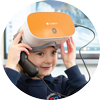
ClassVR brings the whole curriculum to life for younger learners. Pupils can step inside a rainforest, walk among dinosaurs, or explore the solar system, all from their classroom. These shared experiences enhance imagination, improve vocabulary, and help children understand complex ideas in a way that feels real and memorable.

Middle School Education
For older students, ClassVR opens the door to deeper learning, critical thinking, and enquiry-based education.
High school learners can step into advanced, subject-specific simulations that bring complex concepts to life. In science, they can run sophisticated chemistry experiments in a safe virtual lab, explore the inner workings of the brain, or interact with 3D molecular models. In history and geography, they might walk through immersive historical reconstructions or test urban planning scenarios -sparking debate, analysis, and fresh perspectives.
By transforming abstract or challenging ideas into interactive, hands-on experiences, ClassVR helps teachers capture attention, strengthen analytical thinking, and boost long-term knowledge retention.
.jpg)
High School Education
ClassVR empowers further education providers to combine hands-on vocational and technical training with career-ready soft skills. Students can practise technical tasks in engineering, healthcare, or design while AI-driven modules build confidence in communication, teamwork, and presentation. With real-time feedback and safe, immersive practice, learners gain the skills and readiness to succeed in today’s workplace.
.jpg)
College Education
In higher education, ClassVR supports research, advanced study, and professional preparation. Students can engage with complex models, simulations, or environments that would otherwise be inaccessible. It enables universities and colleges to innovate in teaching, making learning more interactive, collaborative, and impactful across disciplines.
SPED Education
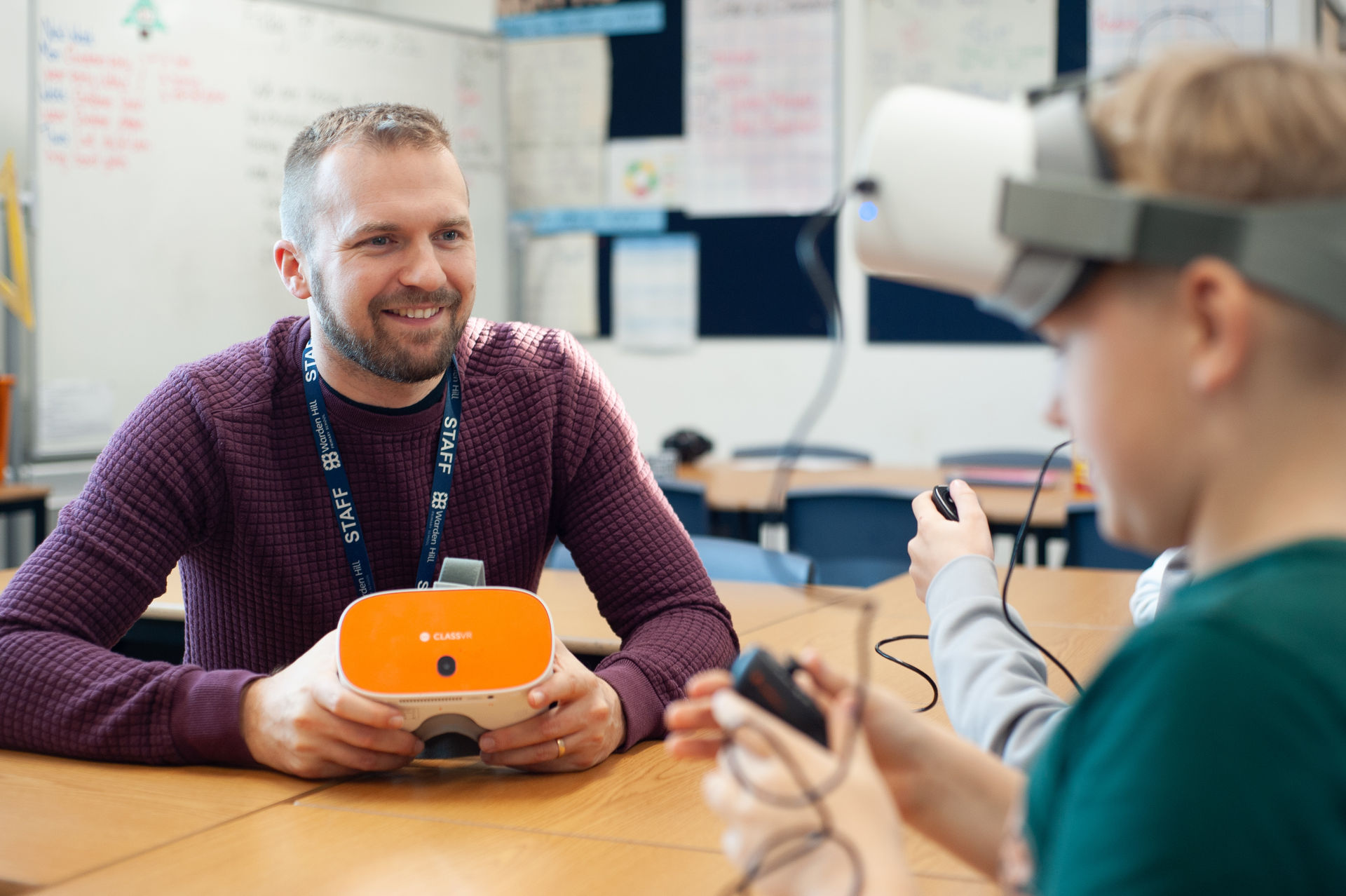
For learners with special education needs, VR provides safe, multi-sensory experiences that are engaging and accessible. ClassVR allows teachers to personalise content, reduce barriers, and create calming or stimulating environments tailored to individual needs. This helps build confidence, communication skills, and active participation in learning.

Trade School
Beyond education, ClassVR is a powerful tool for workforce development and professional training. Organisations can create immersive simulations for technical skills, safety protocols, and soft skills development, reducing risk while improving learning outcomes. VR enables industries to prepare employees with hands-on, practical experience that translates directly into workplace performance.
Whitepaper: Transforming STEM Education
This in-depth guide shows how educators around the world are using VR/AR to bring abstract STEM concepts to life, boost creativity, increase engagement, and support long-term understanding across every discipline. From stepping inside a tornado to holding a human heart in augmented reality, the possibilities for deeper learning are endless.

Complete Form to Learn More
Explore Hands-on Learning with Augmented Reality
Bring complex ideas to life by letting students see and experience them up close – right in the palm of their hand.
With ClassVR’s AR cube, learners can hold, rotate, and examine 3D models as if they were real objects in the palm of their hands, making abstract concepts tangible and interactive.
From studying the intricate details of a human heart to viewing ancient artifacts from every angle, 3D models spark curiosity, deepen understanding, and bring subjects to life in ways textbooks never could.
Take Students Anywhere – Instantly
ClassVR makes it easy to immerse students in the real world through powerful 360° images and videos. From exploring ancient ruins to diving beneath the ocean, learners are transported beyond the classroom and placed right in the middle of the action.
Teachers can also upload 360° content directly to headsets, bringing authentic locations and experiences into the lesson at the click of a button. It’s a simple, powerful way to enrich understanding and create moments students will never forget.
With ClassVR, exploration doesn’t just support learning, it transforms it.
Turn Every Lesson into a Journey of Discovery
Our Explorable Scenes place students at the heart of learning, surrounded by dynamic environments they can move through, navigate, and explore.
This interactive approach goes beyond simply seeing; it makes them feel present in every moment. By actively engaging with their surroundings, learners build a deeper connection to the subject matter, sparking curiosity and strengthening understanding.
These experiences also foster empathy, creativity, and critical thinking skills that help students grow not just academically, but personally.
Set Students Up for Success Beyond the Classroom
Our Career and Technical Education Content empowers students to think bigger, explore deeper and achieve more.
With Eduverse+, our CareerHub delivers inspiring videos to unlock a world of career opportunities that span diverse industries and professions showcase exciting roles across in-demand job sectors.
Our Xcelerate solution includes EduverseCTE, designed to empower students by teaching essential soft skills to help them enter the workforce, giving students interactive experiences across a variety of high-demand industries, and allowing a greater understanding of everyday working life through immersive job shadowing.
Level the Educational Playing Field
ClassVR opens the door to experiences many students would otherwise never have access to.
Including exploring the world, visiting iconic locations, and engaging with powerful learning moments—without the barriers of cost, permission slips or travel.
Build Critical Thinking Skills
Our teacher support resources are designed to deepen learning within virtual field trips. Comprehensive lesson plans and teacher notes help align each experience with the curriculum, while student activities and guided prompts drive engagement and meaningful discussion.
With our content creation tools, teachers and students can extend their field trip experiences even further. Students can upload or recreate their own virtual journeys, then revisit them in VR to reflect, analyse, and refine their understanding
Book a Demo and Experience ClassVR for Yourself
Virtual Field Trips with ClassVR
Virtual field trips take a class from their desks to the Amazon rainforest, the surface of Mars, Ancient Rome, or the deep ocean in under two minutes. No coaches, no permission slips, no lost class time.
For schools dealing with tight budgets or students who can’t easily travel, the math is simple. A VR field trip costs nothing per student once the headset is in place. It runs rain or shine, can be repeated as often as a lesson needs, and reaches every learner at the same time.
ClassVR includes thousands of curriculum-aligned virtual field trips across science, geography, history, social studies, language arts, and CTE. Each one is grouped into ready-to-teach playlists, so a teacher can launch a trip in a single click. Oak Run Middle School uses ClassVR this way to run weekly virtual field trips across subjects. Read the full Oak Run case study.
Includes with ClassVR
Headsets
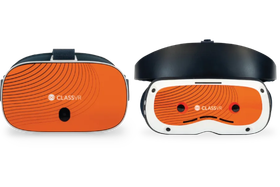
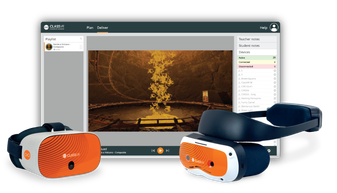
Ergonomically designed VR & AR headsets built specifically for education.

Immersive Content
Access thousands of curriculum-aligned
resources in our Eduverse libraries.
Classroom Management
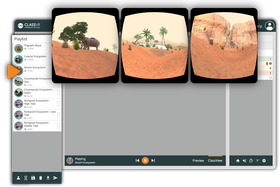
The ClassVR Portal is fully integrated with every ClassVR headset. Giving educators real-time visibility and control.
.png)
Training & Support
Technical and educational teams take teachers from set-up through training and beyond.
.png?updatedAt=1758536654890)
Safe Storage & Charging
Rugged, lockable cases with built-in charging keeps devices safe and lesson-ready.
Device Management
Simplify school IT with ClassVR, centralised device management, remote monitoring and analytics in one platform.
Frequently Asked Questions
Why is VR important for learning?
Virtual Reality (VR) is important for learning because it creates immersive, interactive experiences that help students understand complex concepts in ways traditional methods cannot. Instead of just reading or watching, learners can experience lessons as if they were really there.
Key reasons why VR matters in education:
Encourages Collaboration – Many VR platforms let students learn and solve problems together in shared virtual spaces.
Increases Engagement – VR captures students’ attention and makes lessons more exciting.
Improves Retention – Research shows people remember information better when they experience it in 3D environments.
Supports Experiential Learning – Students can practice skills in realistic simulations, such as science experiments, language practice, or historical site visits.
Enhances Accessibility – VR makes it possible to “travel” to places or scenarios that would otherwise be too costly, dangerous, or impossible.
How do teachers use VR in schools?
Teachers use Virtual Reality (VR) in schools to create immersive learning experiences that go beyond textbooks and videos. With VR headsets and apps, they can bring lessons to life and make abstract concepts easier to understand.
Common ways teachers use VR in classrooms:
Skill Training – Teachers use VR to let students practice real-world skills, such as public speaking, coding, or vocational training.
Virtual Field Trips – Students can “visit” historical sites, museums, or even outer space without leaving the classroom.
STEM Learning – VR simulations let students explore anatomy, chemistry labs, or physics experiments in a safe, hands-on way.
History and Social Studies – Learners can step into different time periods, observe events, and interact with historical environments.
Language Learning – VR allows students to practice speaking in realistic settings, like ordering food in a virtual café or traveling in a foreign country.
Special Education Support – VR provides personalized, interactive experiences to help students with different learning needs.
Does VR improve student engagement and motivation?
Yes, Virtual Reality (VR) can significantly increase student engagement and motivation in the classroom. By creating immersive, interactive experiences, VR transforms learning from a passive activity into an active, hands-on process.
How VR boosts engagement and motivation:
Personalized Experiences – VR can adapt to each student’s pace and interests, keeping them motivated to continue learning.
Immersive Experiences – Students feel “present” in virtual environments, which captures attention better than traditional lessons.
Gamified Learning – Many VR apps use game-like challenges and rewards, encouraging students to participate and achieve goals.
Interactive Learning – Students manipulate objects, conduct experiments, or explore virtual worlds, which makes learning more engaging.
Safe Risk-Taking – VR allows students to experiment and learn from mistakes in a controlled, virtual setting, reducing fear of failure.
Can VR improve knowledge retention in students?
Yes, Virtual Reality (VR) can significantly improve knowledge retention. By immersing students in interactive, realistic environments, VR engages multiple senses and promotes active learning, which helps information stick longer compared to passive methods like reading or watching videos.
How VR boosts retention:
Contextual Understanding – Concepts are taught within realistic contexts, making them easier to remember.
Experiential Learning – Students “learn by doing,” which strengthens memory.
Interactive Simulations – Practicing skills in VR mirrors real-life experiences.
Emotional Engagement – Immersive experiences create emotional connections that enhance recall.
Repetition Without Risk – Learners can repeat scenarios safely to reinforce knowledge.